Summary
In PSE’s framework, bond yields and the yield curve are among the most important cycle indicators — but they must be interpreted within the 18.6-year real estate cycle, not in isolation. A yield curve inversion does NOT signal an immediate crash; what signals the top is the re-inversion back to positive (the “un-inversion”). Rising long-bond yields at end-of-cycle confirm the credit tightening that terminates the cycle. The yield gap (government bond yield vs. industrial earnings yield) is PSE’s gauge of relative market valuation.
Core Claims
-
2025-07-10-gann-sub-email-gann-12-10-july-2025-property-sharemarket-economic (2025-07-10): “Just as the yield curve moves back into positive territory, most economists will think the recession alarm bell is being turned off. But it’s actually quite the opposite.” — Phil Anderson — confidence: high
-
2026-02-16-bitcoin-crash-end-of-cycle (2026-02-16): “This is how real estate cycles end – in tight money conditions and rising longer-term rates.” — confidence: high
-
2026-03-31-roadmap-update-march (2026-03-31): US 30-year yields likely to break above 5% — bad for markets. — confidence: high
-
2026-05-19-gann-12-market-update-may-2026 (2026-05-19): US 30-year Treasury yield has broken out above 5% from a Mexican Pete ascending triangle — yield at highest level since 2007. Market-implied odds now point to a Fed rate hike within six months. CPI +3.8% April YoY (largest in ~3 years); PPI +6.0% (largest since end-2022). “Everything in the market is brought together by interest rates.” — Phil Anderson — confidence: high
-
2021-03-03-sub-email-6-2021-roadmap-march-update (2021-03-03): Rising US bond yields (steepening yield curve) are bullish for banks and the second half of the cycle. — confidence: high
-
2021-06-09-sub-email-25-yield-curve-indicator (2021-06-09): “No US recessions occur when the yield curve is widening.” — Phil Anderson — confidence: high
-
2019-10-28-anderson-unencumbered-sydney-part1 (2019-10-28): The 2019 US and Australian yield curve inversions correctly predicted the onset of recession. — confidence: high
-
2025-07-10-gann-sub-email-gann-12-10-july-2025-property-sharemarket-economic (2025-07-10): The 2022 yield curve inversion did not signal an imminent recession because the real estate cycle placed the downturn still several years away — confidence: high
-
2026-01-15-additional-notes-roadmap (2026-01-15): “There are over $9 trillion in U.S. Treasuries maturing in 2026. That is about one-third of all U.S. Treasury securities outstanding.” — confidence: high
-
2026-05-12-pse-sub-25-roadmap-update-may (2026-05-12): New Fed Chair Warsh incoming with clear instructions to reduce borrowing costs. If effective, supports markets but brings inflation back stronger. If bond yields held in check via monetary policy intervention, real yields fall → gold and silver rise. Key variable for cycle endgame. — confidence: high
-
2026-07-15-bbb-postcard-39-mercury-retrograde-grain-markets (2026-07-15): Fed Governor Waller pushing for rate hikes — inflation started climbing in December 2025, BEFORE the Iran-US conflict, suggesting inflation is structural not just oil-driven. Key question: does Warsh agree or push back? — confidence: high
-
[[sources/2026-05-06-gann-09-market-update-to-5-may|Gann #09]] (2026-05-06): 30-year Treasury yield on the verge of Mexican Pete breakout above 5% (highest since 2007). PCE accelerating to 3.5% YoY in March with clear upward trend. Four dissenting votes at latest FOMC (most since 1992). 2-year yield at 3.88% now above effective fed funds rate — bond market entertaining rate hikes. Market pricing no cuts until end of 2027. — confidence: high [Source: PSE Gann #09, 2026-05-06]
Mechanism / How It Works
The Yield Curve (Short vs. Long Rates)
- Normal/Widening (positive): Long rates > short rates → banks profitable (borrow short, lend long) → credit expansion → cycle continues
- Inverted (negative): Short rates > long rates → banks squeezed → credit contraction signal → recession follows (but NOT immediately in 18.6-year framework; can persist 1–3 years before collapse)
- Re-inversion to positive (PSE’s key signal): Curve reverting to normal AFTER inversion = recession imminent; markets typically rally while this happens (fooling most analysts)
The Yield Gap (PSE’s “Economic Barometer”)
- Formula: Government 10-year bond yield ÷ Industrials earnings yield
- High yield gap: Shares expensive relative to bonds; speculative conditions
- Low yield gap: Shares cheap relative to bonds; buying opportunity
- PSE has tracked the yield gap for Australia, US, UK, and NZ since 1999
- As of April 2020: share yields remained higher than bond yields → complete selloff considered unlikely
Bond Yields at Cycle End
- Short-term rates cut by central bank (QE) → fuels credit expansion
- Long-term rates start rising as inflation returns and government debt grows
- “Inversion resolves” → market interprets as all-clear; actually signals late-cycle
- Rising long bond yields make land debt unsustainable → cycle tips
- Key levels for 2026: US 30-year Treasury > 5% flagged as dangerous threshold
Key Data Points
- 2019 yield curve inversion: Correctly predicted 2020 recession (COVID)
- 2022 inversion: Phil Anderson argued this would NOT bring immediate crash due to cycle position (confirmed: no crash 2022–2025)
- 2025 un-inversion: Yield curve moving back to positive as of mid-2025 = genuine late-cycle warning
- March 2025 Gann email: US 30-year bond yield approaching 5%; viewed as breakout level
- 2026: Tariffs risk higher inflation → higher bond yields → potential cycle trigger
- March 2026 “Trump blink”: Bond market forced Trump to reverse tariff policy; speed of yield rise (not level) was the trigger
- May 19 2026 — 30yr breakout confirmed: US 30-year Treasury yield broke above 5% — highest since 2007 — from a Mexican Pete ascending triangle PSE had been tracking for months. Simultaneously: CPI +3.8% April YoY (3-year high), PPI +6.0% (highest since end-2022). Market pricing now reflects Fed rate hike probability within 6 months. Phil Anderson adds TBT (2× inverse Treasury ETF) to the Mex Pete model portfolio. [Source: PSE Gann #12, 2026-05-19]
- May 26 2026 — Anderson names long bond as primary watch indicator: In his ‘Beginning of the End’ email, Anderson explicitly elevates the long bond to the #1 cycle indicator: “Interest rates — especially the long bond — are what you need to watch now.” He also flags Japanese long-bond risk: rising Japanese rates incentivize capital repatriation and reduced buying of US Treasuries, adding a foreign demand squeeze to the domestic supply pressure. [Source: PSE Sub #26, 2026-05-26]
- June 26 2026 — TBT trade stopped out: The ProShares UltraShort 20+ Year Treasury position (entered May 18 on the 30yr yield breakout above 5%) was stopped out at $34 this week. The 30-year yield breakout — a valid monthly Mexican Pete ascending triangle — remains structurally intact, but the 2× inverse Treasury instrument stopped out as yields pulled back from their highs in the short term. This is a notable divergence: the macro thesis (rising long yields) can be correct while the trading instrument (TBT) still hits its stop due to near-term yield volatility. Anderson does not re-add TBT; the position is closed. [Source: PSE Gann #19, 2026-06-26]
- July 8 2026 — 30-year yield reversing higher on seasonal date (Gann #21): After the pullback that stopped out the TBT trade, the 30-year Treasury yield is now reversing higher on the seasonal Gann date. Anderson identifies this as a false breakout from the Mexican Pete pattern above 5% — the yield broke above 5% but could not sustain it, falling back. The seasonal date now coincides with a fresh turn higher. Anderson will “keep watching for a sustained breakout in longer-term rates, which we can trade with TBT.” The TBT trade is being re-watched, not re-entered — the instrument remains available for a second attempt if the 5% level is decisively reclaimed. [Source: PSE Gann #21, 2026-07-08]
Yield Curve as Sector Signal
- Widening yield curve (positive): Banks profitable → buy banks early in second half
- Inverting/flat curve: Rotate away from banks; watch for credit stress
- Insurance stocks breaking out: Leading signal for higher long rates (insurance stocks = bond proxies)
- REITs: Sensitive to interest rate rises; underperformed 2022–2024 due to this sensitivity
PSE Indicators Chartbook (Yield)
PSE has tracked yield curves monthly since 1999 for:
- US (2yr/10yr spread; 30-year Treasury)
- Australia (bank bill rate vs. 10-year government bond)
- UK Key indicator files: yield-curves-the-economic-barometer.md, us-yield-curve-explanation.md, the-importance-of-a-yield-curve-inversion-and-when.md
Applications
- At cycle start: Rising long rates with widening curve = buy banks; cycle accelerating
- Mid-cycle: Monitor inversion; if yield curve inverts, don’t panic — check cycle position
- Late cycle: Watch for un-inversion (return to positive) — real recession warning
- End-of-cycle signal: 30-year Treasury breaking above 5% = credit cost unsustainable
- Yield gap: Use as valuation tool alongside Bubble Index and Rule of 20
The Great Maturity Wall (2026)
A specific bond yield risk flagged by Akhil Patel:
- $9 trillion in US Treasuries maturing in 2026 (~1/3 of all outstanding)
- ~$350 trillion in global corporate debt requiring refinancing (“Great Maturity Wall”)
- If yields stay elevated as this debt rolls over, credit contraction becomes automatic
- This is a structural amplifier of the cycle-end credit crunch
Contradictions & Open Questions
- PSE’s “un-inversion” signal is not universally recognized — mainstream economics treats the inversion itself as the recession signal
- The 2022 inversion lasted longer than most prior inversions without recession — Phil’s explanation (cycle position) held, but is hard to disprove
- Japanese government bond yield surge (2025, and reaffirmed May 2026) cited as potential global contagion risk — Anderson specifically flags Japan repatriation as a mechanism that could accelerate US Treasury yield rise
- August 2026 — Japanese 30yr at all-time highs with RSI divergence: Cathy Stacey reports Japanese 30-year bond yields have reached all-time highs. RSI is showing lower highs as yields make higher highs — a bearish divergence that “typically projects future chart weakness.” Time counts: July 2026 = 120 months from the July 2016 extreme low; September 2026 = 84 months from the September 2019 higher low. Whether these counts invoke a reaction is being watched. [Source: BBI August 2026 Q&A, 2026-08-20]
- Phil Anderson suggested (2021) currency crisis may be the cycle-end mechanism rather than bonds — these overlap but are distinct scenarios
Related Concepts
- 18-6-year-real-estate-cycle
- private-credit
- financial-timetable
- winners-curse-phase
- sector-rotation
- gold
- us-dollar-hegemony
Visual Evidence
Slides showing bond yields, treasury charts, and money flow analysis.
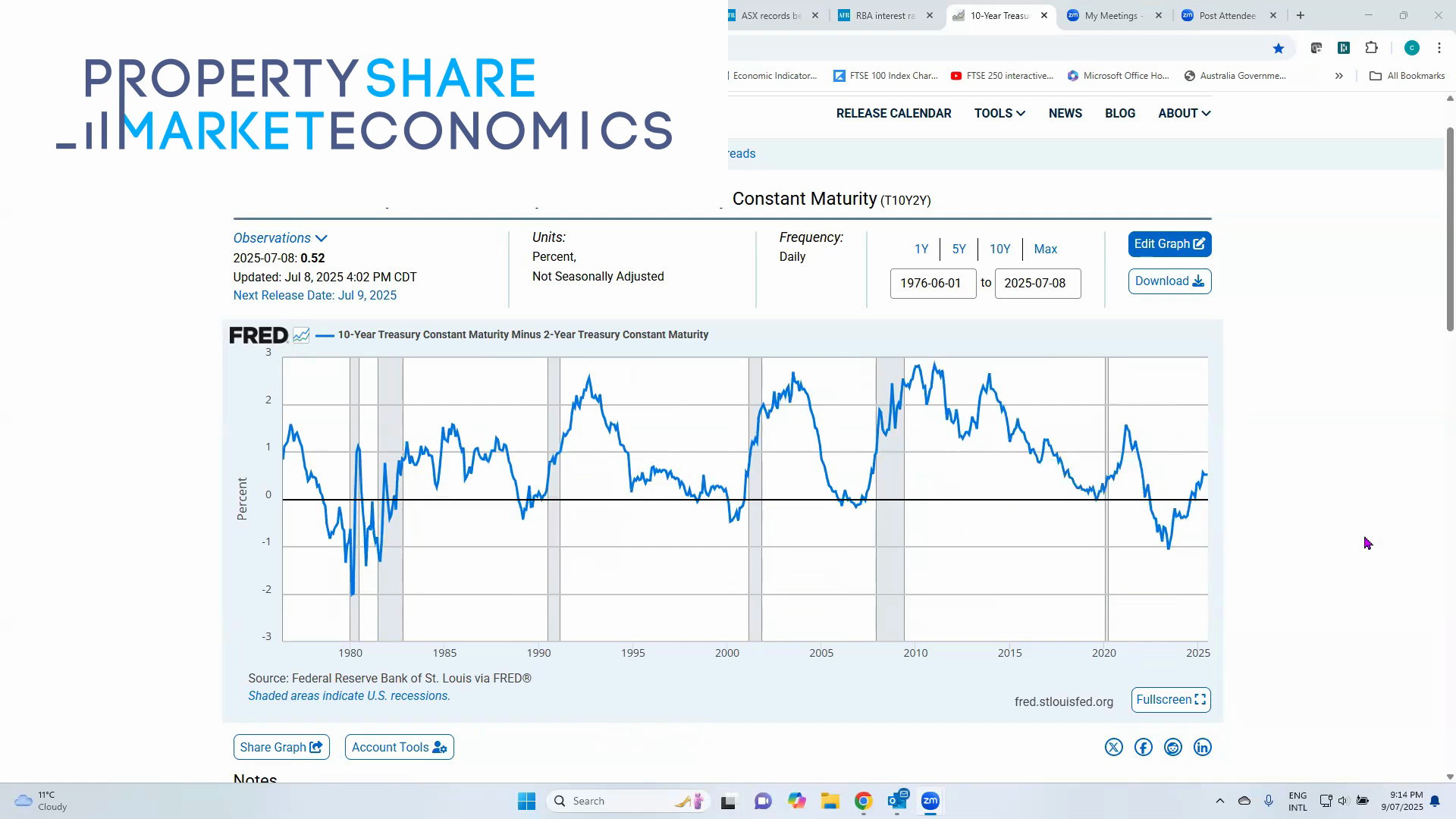 10-Year Treasury constant maturity — long-term interest rate chart for cycle context.
Source: PSE Video
10-Year Treasury constant maturity — long-term interest rate chart for cycle context.
Source: PSE Video
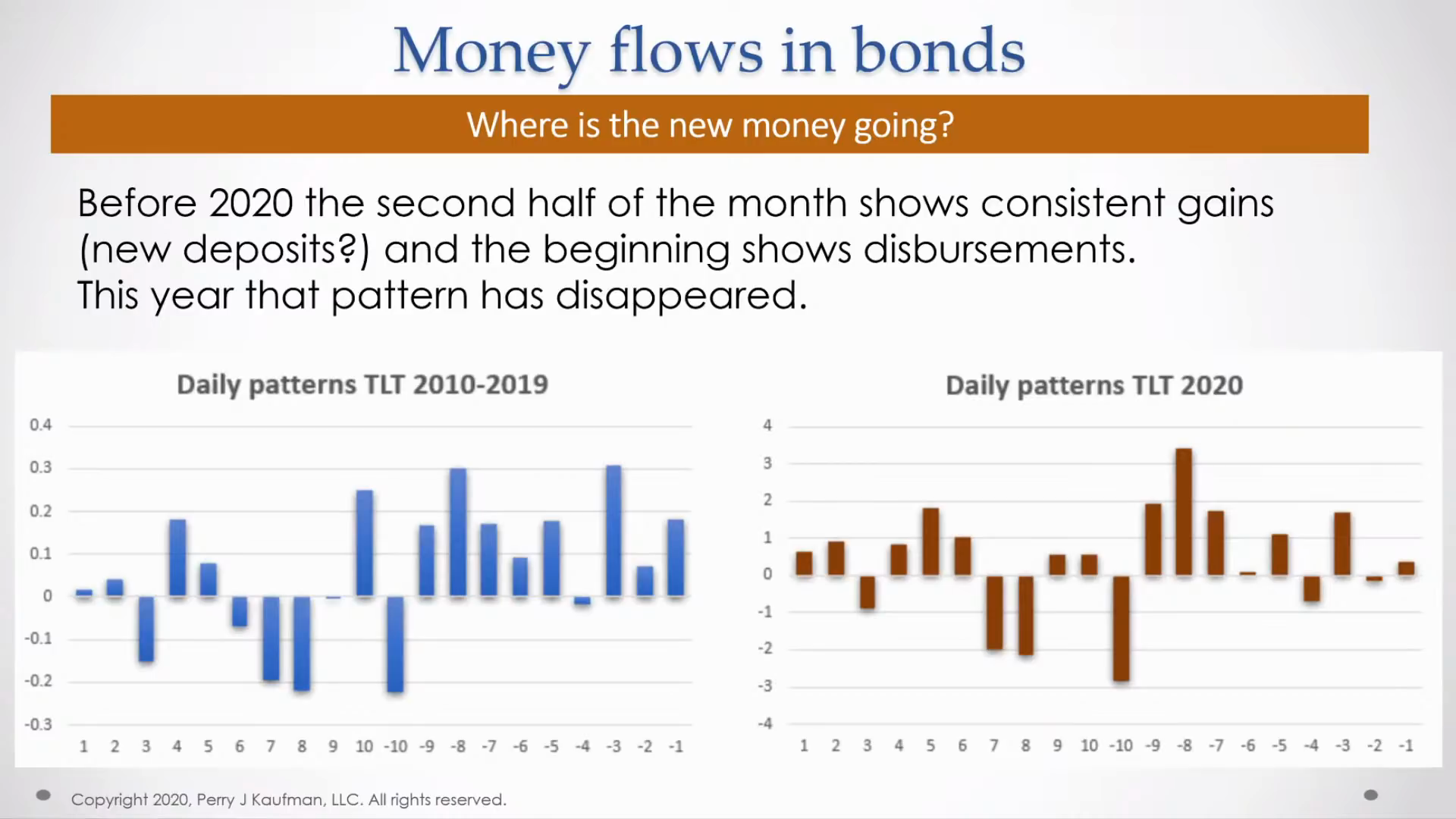 Money flows in bonds — tracking bond market flows against cycle phases.
Source: PSE Video
Money flows in bonds — tracking bond market flows against cycle phases.
Source: PSE Video
 Interest rates and markets — how interest rates interact with the real estate cycle.
Source: PSE Video
Interest rates and markets — how interest rates interact with the real estate cycle.
Source: PSE Video
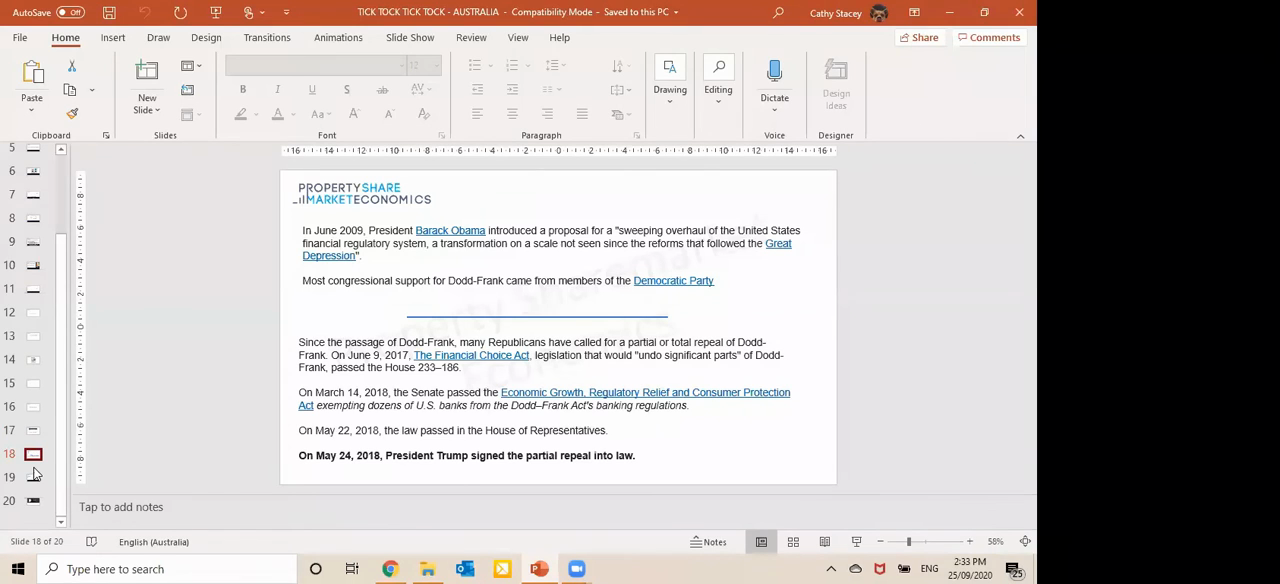 Federal Reserve system — PSE context on how Fed policy relates to cycle timing.
Source: PSE Video
Federal Reserve system — PSE context on how Fed policy relates to cycle timing.
Source: PSE Video
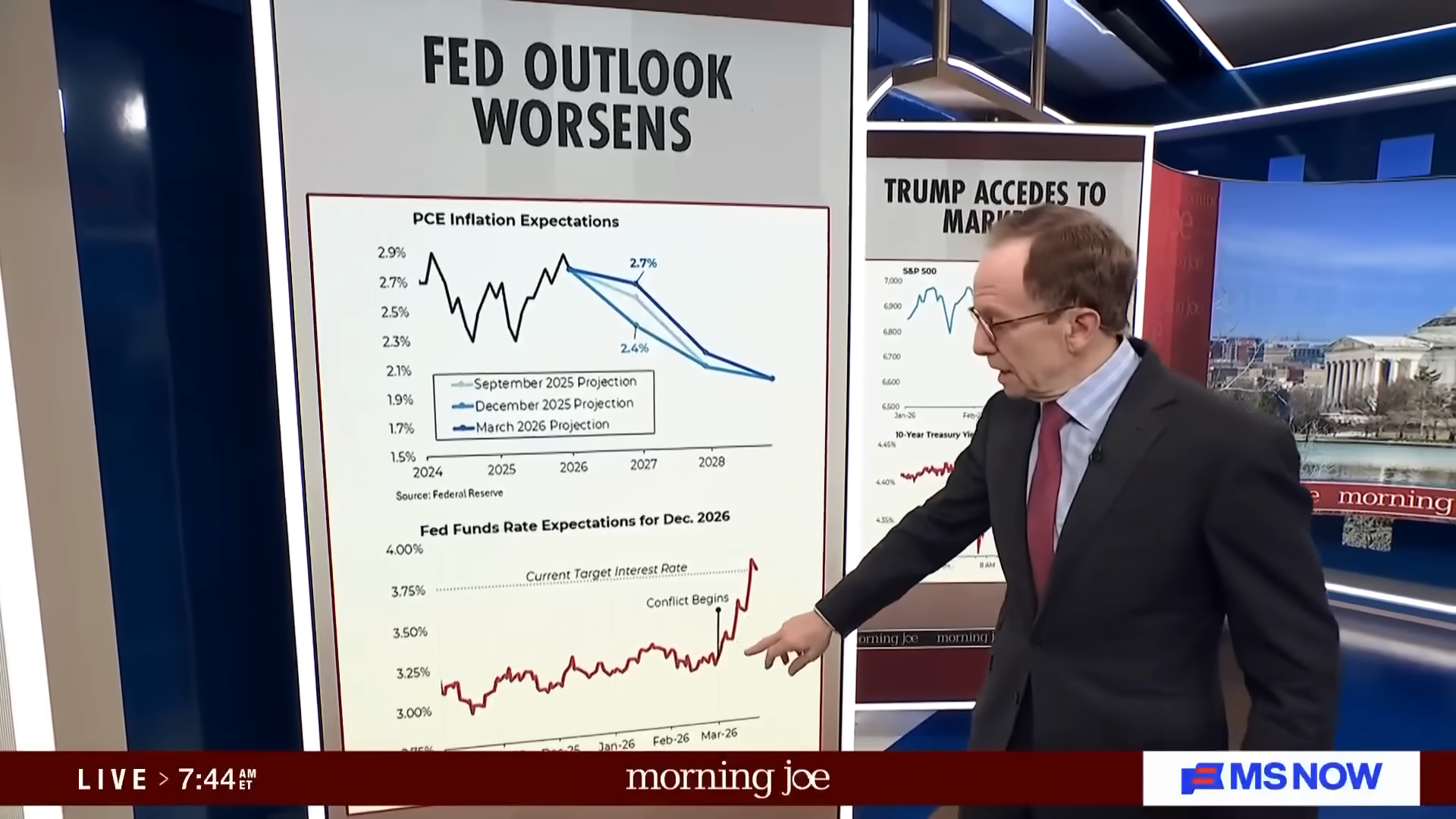 PCE inflation and Fed Funds rate — current cycle inflation/rates comparison chart.
Source: PSE Video
PCE inflation and Fed Funds rate — current cycle inflation/rates comparison chart.
Source: PSE Video