Summary
The Winner’s Curse is PSE’s term for the final speculative phase of the 18.6-year real estate cycle. As of May 26, 2026, Phil Anderson has issued his most direct cycle-end declaration on record: “I think this is the beginning of the end.” [Source: PSE Sub #26, 2026-05-26] Fred Harrison also uses the term extensively in Boom Bust (2005/2010): “The price of land takes off in an almost vertical trend under the influence of what is known as the Winner’s Curse… the winning bids for property are made by people who make the greatest upward errors in their assessment of what a site is worth.” [Source: Boom Bust House Prices Banking and the Depression of 2010, 2026-04-24] The term was formally applied to the full cycle in Anderson’s 2008 book The Secret Life of Real Estate and Banking: “the very worst time to be highly leveraged is the very time it looks safest to be so.” [Source: The Secret Life of Real Estate and Banking, 2008] It is characterized by everyone being “all-in,” extreme leverage, circular investment schemes, new gambling instruments, government officials predicting endless gains, and the disappearance of all cash into speculation. The PSE Clock turned to “3pm” (final frantic peak) in the week of March 23, 2026. As of July 2, 2026, Anderson confirms the phase is “underway in earnest” — citing Gen Z retail traders “going for broke” (Bloomberg June 17), Taiwan stock leverage surging, and South Korean margin debt at record levels as international confirmation that the speculative frenzy is now global and cross-demographic. [Source: PSE Sub #29, 2026-07-02]
Core Claims
- 2026-01-21-trump-running-hot (2026-01-21): “Markets can’t top until we’re all-in. All the cash has to be gone, except for the really smart guys.” — confidence: high
- 2026-01-21-trump-running-hot (2026-01-21): Amazon, Meta, Microsoft moved from large cash piles to net debtors — “all-in on AI.” — confidence: high
- 2026-02-13-late-cycle-repeats (2026-02-13): Trump Dow 100K prediction after Dow crossed 50K = classic late-cycle hubris. — confidence: high
- 2026-03-23-private-credit-crumble (2026-03-23): PSE Clock turned to 3pm in week of March 23, 2026. — confidence: high
- 2026-03-26-notes-and-items (2026-03-26): Margin debt at new cycle peak; mortgage stress rising (Google Trends). — confidence: high
- 2026-05-26-pse-sub-26-beginning-of-the-end (2026-05-26): “I think this is the beginning of the end.” Anderson identifies three simultaneous signals — AI/data center debt being offloaded by banks, African governments using total return swaps amid soaring debt costs, and the US 30-year yield confirming a Mexican Pete breakout above 5% — as characteristic late-cycle markers. Explicitly maps 2026 AI debt to the 2006 peripheral land grab: “Now you’re seeing the same thing with data centers, AI, and everything else.” Gives no specific peak date but says “it could take months, maybe even a year.” Closes: “Now is not the time to take on heavy debt.” — confidence: high
- 2026-05-27-gann-13-market-update (2026-05-27): The Winner’s Curse is intensifying with a *~2T target on June 12 2026 — largest IPO ever; OpenAI and Anthropic ~4 trillion IPO wave is on the way, which is exactly the type of speculative mania we should be seeing at this stage of the cycle.” IPO bunching at unprecedented per-deal valuations is the public-markets confirmation that cycle-peak speculation is running rampant. See IPO Mania. — Phil Anderson — confidence: high
- 2026-06-10-bbb-postcard-37-spacex-ipo-distortion (2026-06-10): Darren Wilson further highlights the SpaceX IPO as a prime example of late-cycle speculation, describing it as “one of the single most blatant and outright manipulations of modern markets” designed to make only a “select few rich beyond imagination” and “fundamentally altering the stock markets themselves.” This event, presented as public ownership, serves as a clear marker of the Winner’s Curse Phase, linking market distortion to real estate cycle implications. — Darren Wilson — confidence: high
- 2026-05-27-bbi-may-2026-qa (2026-05-27): Akhil Patel reframes “where is the euphoria?” — “Flows of investment volume this cycle by some order of magnitude has dwarfed anything we’ve seen in previous cycles.” The euphoria is present, just concentrated in AI/semiconductor multiples, crypto, and Polymarket rather than land. The sentiment signature is K-shaped (see K-Shaped Economy) but the cycle position is unchanged. — confidence: high
- 2026-05-27-bbi-may-2026-qa (2026-05-27): Phil Anderson: “Nobody saw it back then, nobody will see it now… we all still want house prices to go up.” The Winner’s Curse is invisible to participants by construction — the absence of a public “the price of my house is too high” admission is the late-cycle signature. Visible euphoria is forecast to intensify over the next 8–9 months. — confidence: high
- 2026-05-27-bbi-may-2026-qa (2026-05-27): Anderson on SpaceX: “That will be the biggest land grab of the millennium. People will allow him, especially with Trump at the top of the White House.” Orbital launch slots, Starlink ground-station siting, and spectrum allocation reframed as Ricardian-rent “land” being captured at the cycle peak under a permissive political window. — confidence: high
- 2026-06-05-bbb-postcard-36-ai-media (2026-06-05): Darren Wilson supplies the structural decomposition of the cycle’s defining bubble — the AI rally as a four-layer Jenga tower (models, infrastructure, rare earths, energy) sitting on Chinese choke points — and flags the demand-side trigger Anderson has not yet specified: “One day we’re all going to wake up and realize there’s no return anytime soon for the money put in. And that could very well be the tipping point that precedes an almighty crash.” See AI Bubble Thesis. — Darren Wilson — confidence: high
- 2026-06-16-gann-17-portfolio-update (2026-06-16): Anderson stacks four independent speculative-excess indicators simultaneously: (1) Tallest Building Indicator — Jeddah Tower 2028 completion targeting new height record, construction resumed 2025; (2) IPO Mania — SpaceX IPO raised 2T+ market value, Musk first trillionaire; (3) NYSE Margin Debt — margin/M2 spiking to 2000/2008 levels; (4) Equity Issuance Cycle — JPMorgan projects $1.5T net issuance over two years, strongest since the late 1990s. Despite all four signals firing, Anderson states: “It’s hard to believe that there’s probably more mania to go” — confirming the Winner’s Curse is intensifying but has not yet peaked. — Phil Anderson — confidence: high
- 2026-07-02-pse-sub-29-july-commentary (2026-07-02): Anderson confirms the Winner’s Curse is “underway in earnest” with three international signals: Gen Z traders “going for broke chasing the American dream” with risky strategies (Bloomberg June 17), Taiwan stock leverage surging (Bloomberg June 17), and South Korean margin debt soaring (Reuters June 8). Framed alongside rising government borrowing costs globally and mounting interest payments as a share of GDP — “history shows all economic excesses are eventually ‘popped’ by rising interest rates.” Restates that the US stock market “isn’t anywhere near high enough yet to see a crash anytime soon” but signals “one coming in due time.” Previews an extended Roadmap out to 2031. — Phil Anderson — confidence: high
- 2026-07-15-bbb-postcard-39-mercury-retrograde-grain-markets (2026-07-15): Darren Wilson identifies HUD’s plan to “take a machete to red tape” and improve mortgage access for non-prime borrowers as “a classic late-cycle play” — the pattern where regulators roll back rules to make it easier to lend at precisely the point in the cycle when credit quality is deteriorating. The timing in year 14 of rising US land prices raises the question of whether the cycle could exceed the historical 14-year limit, though Wilson does not predict an extension. Expanding non-prime mortgage access mirrors the 2005–07 subprime expansion that amplified the last cycle’s crash. — Darren Wilson — confidence: high
- 2026-07-17-pse-sub-31-right-emotions-are-building (2026-07-17): Anderson identifies a key late-cycle sentiment signal: BofA survey data (via Bloomberg July 14) shows fund managers reporting increased bullishness with cash levels falling below 4% (end of June). Anderson frames this as “the right emotions are building” — fear disappearing, “all we can see is blue sky” — which he identifies as a necessary precondition for the final top. Provides a practical heuristic: buy when fund manager cash levels are high (6%+), look to sell when they fall below 4% toward 3%. — Phil Anderson — confidence: high
- 2026-07-17-gann-22-reminder-about-the-process (2026-07-17): Anderson flags Bloomberg’s July 10 article on young investors “betting it all” as “a common ‘Winner’s Curse’ response” that “usually goes pear-shaped for most in the end.” This corroborates the Sub #29 (Jul 2) Gen Z trader signal from a different angle — the Bloomberg piece focuses on risk-taking behavior rather than leverage statistics. — Phil Anderson — confidence: high
- BBI July 22 Q&A (2026-07-22): Anderson’s Taylor Swift wedding call — first made in 2024 as a cycle-top emotional marker — was confirmed the first week of July 2026 when the wedding took place, though it was overshadowed by World Cup coverage. Anderson notes the full emotional crescendo signalling “blue sky ahead” is still to come. This is the first of Anderson’s specific cultural-marker predictions to be confirmed in real-time. — Phil Anderson — confidence: high
- Sep 2 Mex Pete Portfolio PDF (2026-09-02): The Mex Pete Model Portfolio has reached its most diversified posture in documented history — 5 active longs — but 3 of 5 are underwater. The portfolio’s pivot from US equity breakouts to commodity/resource exposure (DBA agriculture, CGS/SFR ASX mining) is the operational expression of the late-cycle commodity rotation predicted by the Winner’s Curse framework. The thinning watchlist pipeline (3 US + 1 AUS = 4 total pending setups, lowest ever) confirms that the easy breakouts have fired and the system is running out of fresh setups — consistent with the final-leg-up thesis where diminishing marginal setups signal the approach of the cycle peak. — confidence: high
- BBB 63 (2026-09-23) (2026-09-23): The demand-side completion rule for the final speculative leg. Darren Wilson asks where the last marginal dollars of the cycle must come from and concludes it will not be voluntary US risk-taking: ~US115bn of 2025 purchases, ¥200trn in domestic equity trusts by May 2026). Wilson’s verdict names the phase outright: “These governments are manufacturing speculative behaviour through incentives, tax structures, and patriotic framing. That’s exactly the kind of thing that precedes a blow off top” — “lambs led to their slaughter.” He pairs it with the cycle declaration: “We have arguably already seen the ultimate peak in US land values… Now is not the time to be going all in on any market.” This is the Winner’s Curse at sovereign scale: capital committed at the worst possible moment by the parties making the greatest upward errors about value. — Darren Wilson — confidence: high [Source: PSE, BBB 63, 2026-09-23]
Mechanism / How It Works
The Winner’s Curse plays out in a recognizable sequence:
- Leaders/officials make grandiose predictions (Bush 2007, Trump Dow 100K 2026)
- All sectors join the rally — even previously unloved stocks move up
- New financial instruments created to absorb remaining capital (2026: stablecoins pushed as US Treasury demand instrument)
- Largest companies become net debtors funding speculative projects (2026: Amazon, Meta, Microsoft all-in on AI capex; banks offloading data center debt risk)
- Private credit creates hidden leverage; quality of collateral deteriorates
- “Blue Owl moment” — first major institution exits quietly
Key Evidence
- PSE Clock progression: 3pm reading on March 23, 2026
- Private credit cascade: Blue Owl → Blackstone BCRED → Black Rock TCP (Feb-Mar 2026)
- Margin debt: new peak forming (FINRA data, March 2026)
- Google Trends “help with mortgage” spike
- Bitcoin crash 50% from peak as liquidity warning signal
- 2026-05-26: Banks offloading AI/data center debt via new instruments (FT May 4 2026); African governments using total return swaps amid soaring debt costs; US 30yr yield above 5%; Detroit automakers flagging $5B commodity price hit from Middle East war supply chain stress. [Source: PSE Sub #26, 2026-05-26]
- 2026-05-27 (Gann #13):
2T target), OpenAI (1T). Concurrent with University of Michigan consumer sentiment at 44.8 (lowest in series history, since early 1950s). The simultaneous record-low + record-high prints are the textbook late-cycle K-shape. [Source: PSE Gann #13, 2026-05-27] - 2026-05-27 (BBI Q&A): Vendor financing (Nvidia investing in customers that buy Nvidia chips), private credit filling banking-system gaps at scale, double-ordering across supply chains, German DAX / French CAC / UK FTSE / Japanese Nikkei all simultaneously at all-time highs — the global late-cycle non-bank-credit-fills-the-void pattern. [Source: BBI Q&A, 2026-05-27]
- 2026-06-16 (Gann #17): Four independent speculative-excess indicators fire simultaneously: Jeddah Tower 2028 (tallest-building record), SpaceX IPO records confirmed (2T+ market value, first trillionaire), NYSE margin debt/M2 at 2000/2008 levels, JPMorgan $1.5T net equity issuance projection (strongest since the late 1990s). Financial conditions remain “extremely loose” despite the rate-hike outlook. Anderson confirms the phase is intensifying but explicitly states “there’s probably more mania to go” — the peak has not arrived. [Source: PSE Gann #17, 2026-06-16]
- 2026-07-02 (Sub #29): International confirmation of the Winner’s Curse — speculative excess is now global and cross-demographic. Gen Z traders chasing the American dream (Bloomberg June 17), Taiwan stock leverage surging, South Korean margin debt at record levels (Reuters June 8). Rising government borrowing costs and interest payments as a share of GDP across major economies provide the rate-pressure backdrop. Anderson: “history shows all economic excesses are eventually ‘popped’ by rising interest rates” — but restates that the crash is not yet imminent. [Source: PSE Sub #29, 2026-07-02]
- 2026-07-17 (Sub #31): Fund manager sentiment reaches late-cycle signal levels — BofA survey (via Bloomberg July 14) shows US fund managers increasingly bullish with cash levels falling below 4% (end of June). Anderson frames this as “the right emotions are building” — fear disappearing, “all we can see is blue sky” — and identifies it as a necessary precondition for the final top. Provides practical heuristic: buy when cash levels are high (6%+), sell when they fall below 4% toward 3%. [Source: PSE Sub #31, 2026-07-17]
- 2026-07-17 (Gann #22): Bloomberg’s July 10 article on young investors “betting it all” flagged by Anderson as “a common ‘Winner’s Curse’ response” that “usually goes pear-shaped for most in the end.” Corroborates the Sub #29 Gen Z trader signal from a behavioral rather than leverage-statistics angle. [Source: PSE Gann #22, 2026-07-17]
- 2026-07-22 (BBI July Q&A): Anderson’s Taylor Swift wedding prediction — first made in 2024 as a cycle-top emotional marker analogous to Rudolph Valentino (1920s) and Paris Hilton (2004–07) — was confirmed the first week of July 2026 when the wedding took place, though it was overshadowed by World Cup coverage. Anderson notes the full emotional crescendo signalling “blue sky ahead” is still to come, framing this as a partial confirmation rather than the complete marker. This is the first of Anderson’s specific cultural-marker predictions to be confirmed in real-time. [Source: BBI July 2026 Q&A transcript, 2026-07-22]
- 2026-09-21 (Sub #40 — Roadmap update, Akhil Patel): The Winners’ Curse mechanism arrives on a calendar rather than a data print. Patel’s 90-degree count from the 5 August Dow high to the 3 November US mid-terms — with early May at 180 degrees and early April ~30 weeks out — flags the election window as the next scheduled emotional node, and states the resolution “doesn’t have to be a positive event; it could be the resolution of something negative that frees the market to move upwards.” That is the pure winner’s-curse shape: the final leg is a relief move inside a late-cycle upswing, and the correct response is to stay in the trend with stops rather than bet on a crash date (“you invest or trade according to the trend, not the forecast”). Contrasting datapoint the same week: the new Fed chairman raised rates against market expectation — the credit-tightening pressure PSE says eventually pops the excess. [Source: PSE Sub #40, 2026-09-21]
Applications
- PSE Clock at 3pm means tighten risk management
- “Own your home outright, manage debt, 30% price fall buffer”
- Watch for private credit/insurance sector distress announcements
- When all news is euphoric and everyone is predicting higher prices, prepare for reversal
Contradictions & Open Questions
- Exactly when does 3pm become 4pm (the crash)? — Anderson (May 26 2026): “it could take months, maybe even a year.”
- Iran war may have advanced the timeline — or may be a temporary disruption
- Anderson frames the period as a “battle” between the US government pushing AI-driven growth and structurally rising interest rates. Which force wins, and when, is the open question.
Related Concepts
Key Sources
- 2026-02-19-tim-moffatt-practically-applying-186-cycle — Akhil Patel (Feb 2026): Oakleigh 18.6 fund already shifting defensive (running cash, cutting CBA/Wesfarmers); warns passive/index fund dominance (~80% of inflows) creates herd-exit risk at cycle top: “everyone is selling those same assets at the same time simultaneously.” Phil: Trump is “the perfect foil” distracting from the cycle completing.
- Credit Crisis
- AI Bubble Thesis — the AI rally is the Winner’s Curse asset class of this cycle; the Jenga-tower structure identifies the specific failure modes for the late phase.
- IPO Mania — the ~$4T 2026 IPO wave is the public-markets expression of the Winner’s Curse.
July 2026 Update — “All the Right Things Seem to Be Happening” (Sub #34)
Phil Anderson (Sub #34, Jul 31 2026) declares the Winner’s Curse checklist filling in: homebuilders peaked, US house prices (OECD/Zillow) rolling over, mortgage rates elevated with 30-year yields threatening higher, and food inflation emerging as the next pressure point (FOOD ETF watch, Indonesian crop failures). “Increasing debt loads, war pressuring energy prices and perhaps food inflation on the way. You couldn’t wish for better ‘Winner’s Curse’ developments to put upwards pressure on long-term interest rates… It’s just a question of waiting. Further rises in US interest rates will cause much damage and should bring in recession after 2026 and into 2028.” [Source: [[sources/2026-07-31-sub-email-34-latest-tracking-re-cycle|PSE Sub #34]], 2026-07-31]
Visual Evidence
Slides illustrating the Winners Curse / speculative peak phase at the top of the real estate cycle.
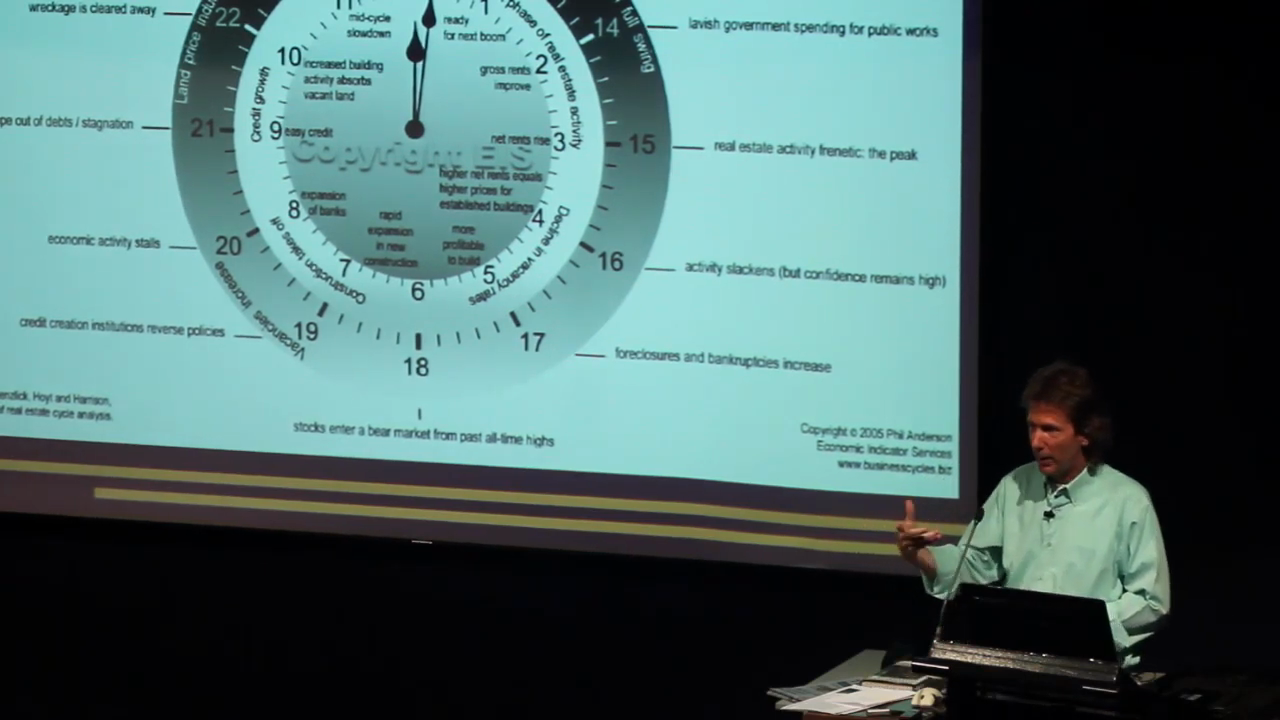 Economic stages of the real estate cycle — with speculative phase annotated.
Source: PSE Video
Economic stages of the real estate cycle — with speculative phase annotated.
Source: PSE Video
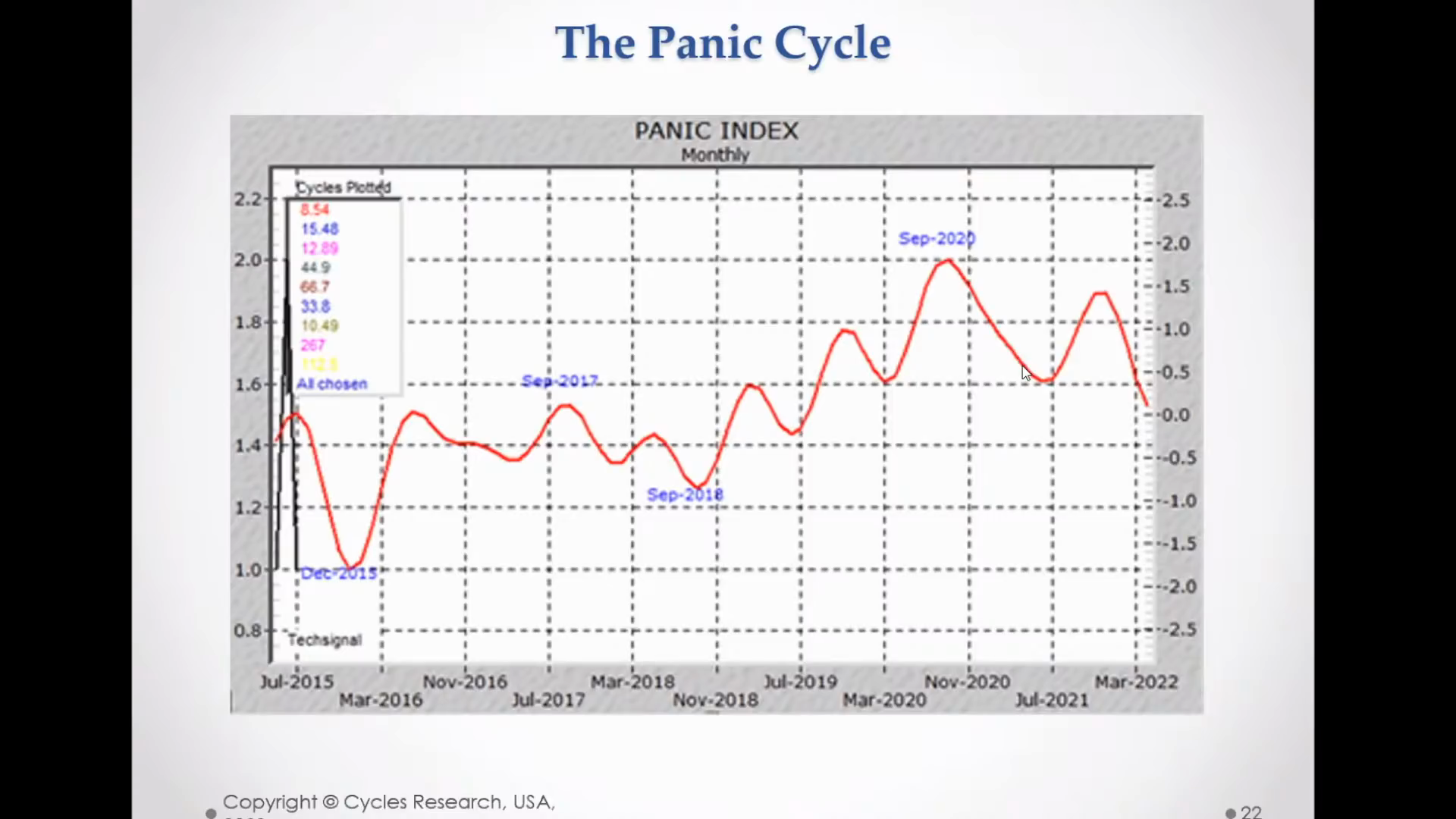 Panic index chart — measures speculative frenzy as a cycle-top indicator.
Source: PSE Video
Panic index chart — measures speculative frenzy as a cycle-top indicator.
Source: PSE Video
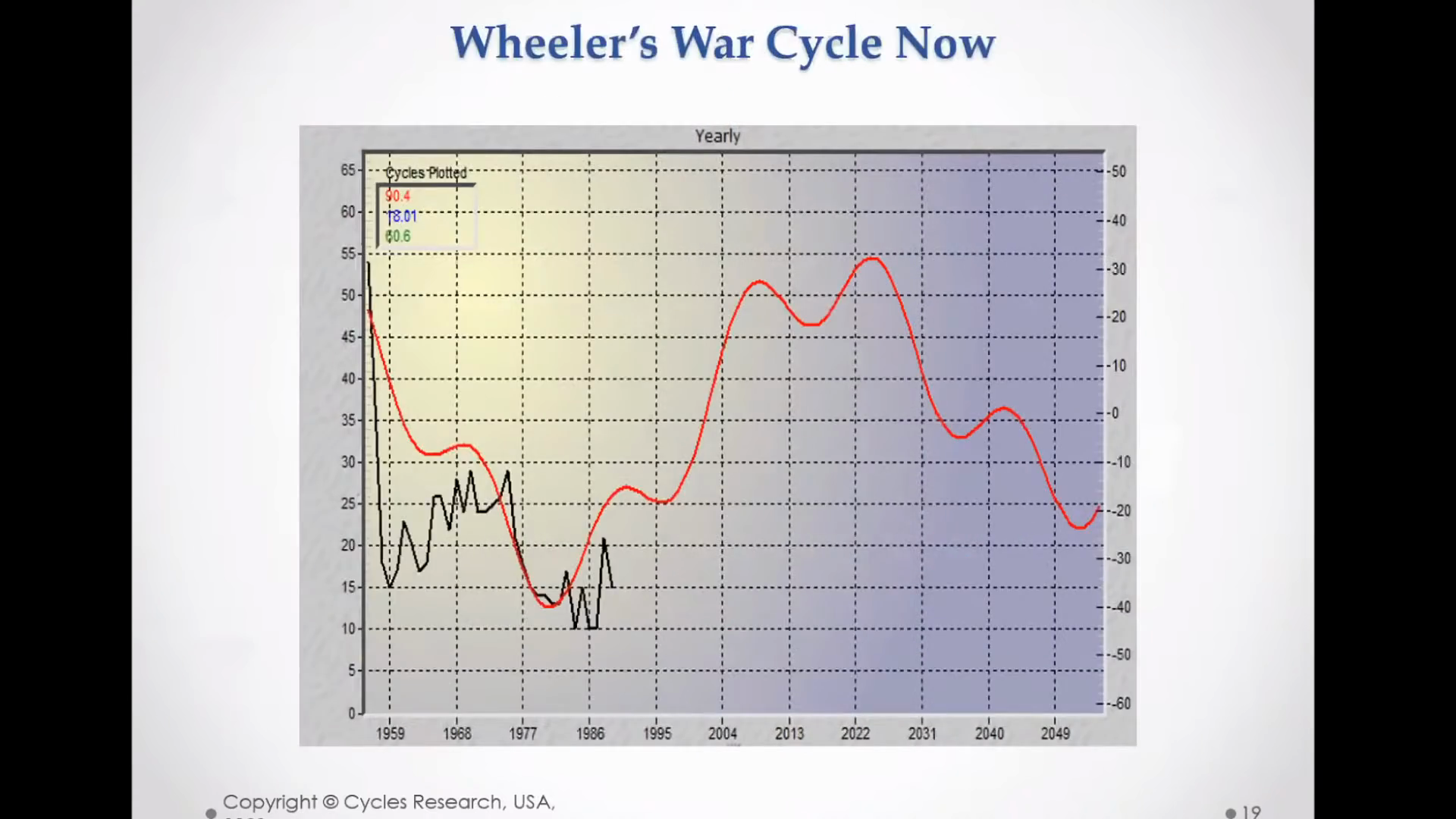 Panic Index — PSE’s proprietary tool for identifying speculative excess.
Source: PSE Video
Panic Index — PSE’s proprietary tool for identifying speculative excess.
Source: PSE Video
 18-20 year cycle with phases — showing the peak/mania phase in context.
Source: 2022-10-01-bbi-gold-coast-session-part-2
18-20 year cycle with phases — showing the peak/mania phase in context.
Source: 2022-10-01-bbi-gold-coast-session-part-2
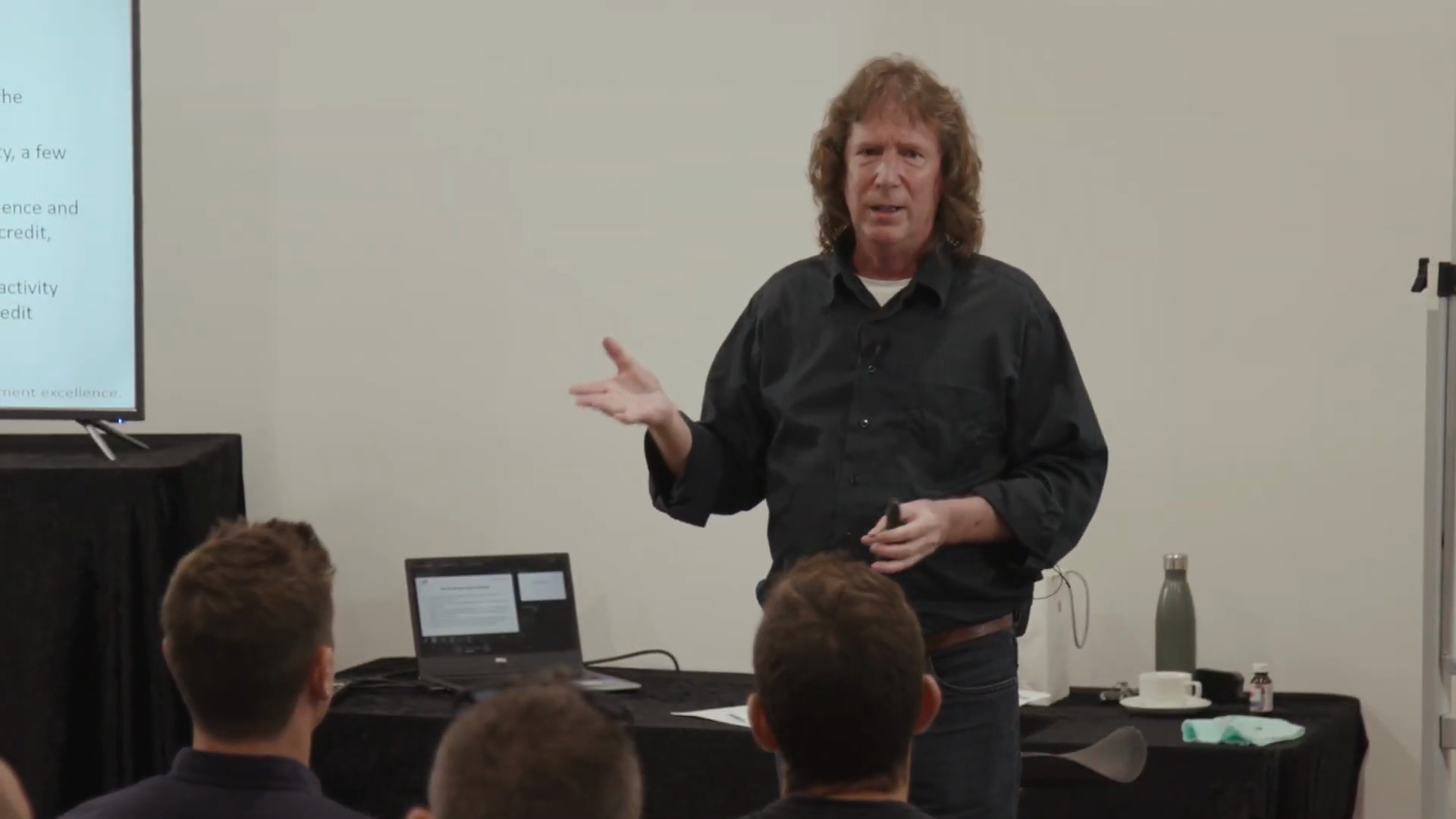 Four phases of the cycle — including the speculative winners-curse peak phase.
Source: 2022-10-01-bbi-gold-coast-session-part-2
Four phases of the cycle — including the speculative winners-curse peak phase.
Source: 2022-10-01-bbi-gold-coast-session-part-2
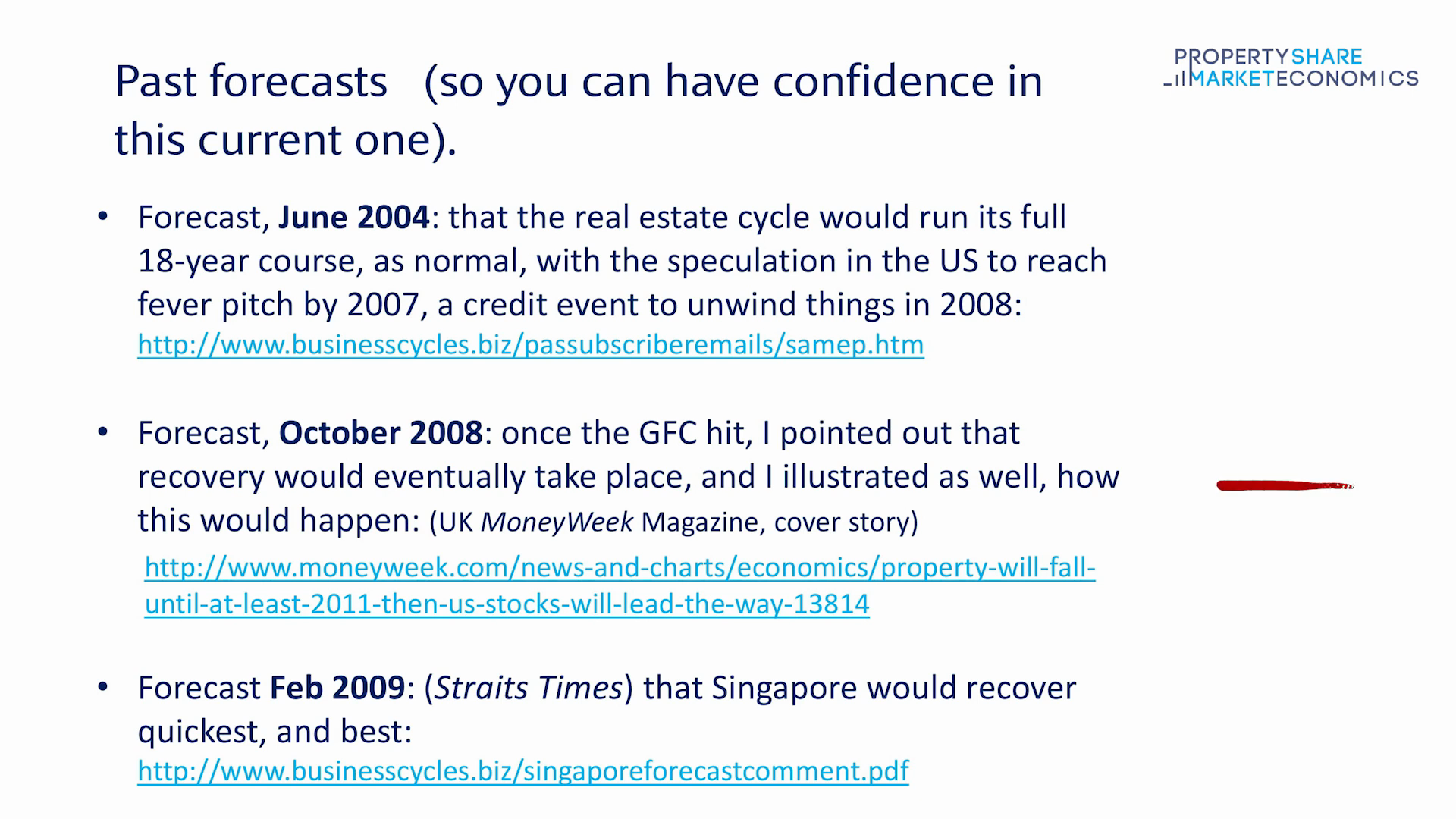 Past forecasts — tracking prior cycle tops to calibrate current peak timing.
Source: 2022-10-01-bbi-gold-coast-session-part-1
Past forecasts — tracking prior cycle tops to calibrate current peak timing.
Source: 2022-10-01-bbi-gold-coast-session-part-1