Summary
- 2026-09-22-pse-qa-akhil-patel-part-1 (2026-09-22): Patel states his own intellectual origin: “I actually came into all of this — all of this interest in cycles and in the economy — via Henry George, and via the idea that actually there is a solution to boom and bust.” He is explicit that a UK reform would NOT be the Georgian single tax but a tax layered on top of existing taxes (VAT, wages, profits) and so would not end the cycle — while re-basing council tax off early-1990s valuations onto up-to-date land values remains “a very needed reform.” He sees no political seriousness anywhere and expects the cycle to repeat “for the indefinite future.” — confidence: high [Source: PSE Q&A, Akhil Patel, 2026-09-22] Land Value Theory is PSE’s foundational policy framework, drawn from Henry George (Progress and Poverty, 1879), David Ricardo, and Adam Smith. The core claim: land (location) derives its value from the community, not from the landowner’s effort. Therefore, the rental value of land should be collected by the community (as a “Citizens Dividend”) rather than by private landowners. Failure to do this creates the real estate cycle by allowing speculative land price escalation. PSE treats this as the single most important policy insight in economics — and its systematic suppression in mainstream economics as evidence of institutional capture by landowner interests.
Core Claims
- BBB 63 (2026-09-23) (2026-09-23): A live counter-example to rent-collection: policy subsidising financial-asset ownership instead of collecting land rent. Darren Wilson documents two state programmes designed to move household savings out of deposits and into equities — the EU Savings and Investments Union (tax-advantaged accounts with deductions/deferrals/exemptions, zero commission, no minimums; von der Leyen casting €10trn of idle household savings as a competitiveness problem) and Japan’s NISA (permanent tax exemption replacing a ~20% profits tax, reusable ¥18m lifetime quota, home-purchase book value credited back). Neither touches land rent: the EU’s inducement carve-outs (fees funding “research and other services”) and adviser-conduct rules repeat the last cycle’s pattern rather than correcting it — “Corners will be cut… this won’t truly come to light until the tide goes fully out.” Wilson’s conclusion applies the Georgist diagnosis in behavioural terms: “These governments are manufacturing speculative behaviour through incentives, tax structures, and patriotic framing. That’s exactly the kind of thing that precedes a blow off top.” The mirror-image of the LVT remedy — the state engineering the enclosure of savings into assets whose gains accrue to existing owners (and land) rather than returning rent to the community. — Darren Wilson — confidence: high [Source: PSE, BBB 63, 2026-09-23]
- 2026-05-11-book-launch-fred-harrisons-cheating (2026-05-11): Fred Harrison’s new book ‘Cheating’ directly addresses how mainstream economics suppresses the idea of rent and how governments choose to tax wages instead of land, harming prosperity. — confidence: high
- 2026-06-12-citizens-dividend-announcement (2026-06-12): Phil Anderson publicly launches citdiv.org — a dedicated Citizens Dividend educational site — framing it as a direct complement to PSE’s cycle work. For the first time, PSE’s Georgist policy thesis moves beyond subscriber content into a free public educational platform. — Phil Anderson — confidence: high
- 2026-01-12-us-dollar-venezuela (2026-01-12): “None of this could happen if the rent of land was collected by the community, and handed back to said community as a citizen’s dividend.” — Phil Anderson — confidence: high
- 2026-03-09-tariffs-and-the-fights (2026-03-09): “They can’t introduce anything that reduces land rent costs” — all productivity gains flow into rent; labor/capital savings are absorbed by land price — confidence: high
- 2026-03-31-roadmap-update-march (2026-03-31): “It always comes back to land and rent.” — US foreign policy is ultimately about securing rent overseas. — confidence: high
- 2020-02-28-feb-2020-forecast-class-phil-economics-is-politics (2020-02-28): Fred Harrison’s history — Monash University demanded removal of all references to Henry George from PhD thesis; proof that Georgism is institutionally suppressed. — confidence: high
- 2026-01-14-small-cycles-large-cycles (2026-01-14): Chávez nationalized oil instead of taxing rent — “the whole thing could have been avoided if Chávez understood Henry George, David Ricardo, and Adam Smith.” — confidence: high
- Multiple sources: Phil Anderson was bribed by a Liberal Party front group in 1991 to stop campaigning for land-value rating — refused. — confidence: high
- 2026-05-15-the-land-trap-mike-bird (2025): Bird (mainstream financial journalist) endorses a partial land value tax as a pragmatic remedy: “a tax on the value of land, even at levels far less confiscatory than those once proposed by Henry George, could do a great deal to mitigate the most damaging modern consequences.” He also notes the political reality: unlike George’s era, today millions of small homeowners have benefited from rising land prices, making reform politically much harder. — confidence: high [Source: Bird, The Land Trap, 2025, Epilogue]
- 2026-04-23-ricardos-law-house-prices-tax-clawback-scam-fred-harrison (2026-04-23): Harrison’s Ricardo’s Law (2006) — progressive taxes failed to deliver justice; one essential reform targets tax system; £240bn UK gain / $4-10K US worker gain projected from land tax reform; English Civil War origins of land enclosure traced. [Source: pse-archive/Books, 2026-04-23]
- 2026-04-23-power-in-the-land-fred-harrison (2026-04-23): Harrison’s Power in the Land (1983) — land monopoly as root cause of capitalism’s failures; 100% annual land rental tax proposed; Winston Churchill 1909 quote on extractive land monopoly; counters Marxist capital-labor framing. [Source: pse-archive/Books, 2026-04-23]
- 2026-04-23-the-secret-life-of-real-estate-and-banking-phil-anderson (2026-04-23): Anderson’s primary book — argues the 18-year cycle is driven by the enclosure of natural resources / capitalization of ground rent, facilitated by bank credit; Ricardo’s Law of Rent and Fred Harrison’s thesis cited as theoretical underpinnings. [Source: pse-archive/Books, 2026-04-23]
The Henry George Thesis
Progress and Poverty (1879)
Henry George’s central question: Why does poverty persist and worsen alongside economic progress? His answer:
- As civilization advances, land values rise (community-created value)
- This value is captured privately by landowners
- Workers/businesses must pay increasing rent to access productive land
- Result: all economic progress is absorbed as land rent → wages stagnate → poverty persists
The Single Tax Proposal
George’s solution: abolish all other taxes and replace with a single tax on land value (not buildings, not labor).
- This would:
- Return community-created value to the community
- Eliminate the incentive for land speculation
- Fund all government services via the “Citizens Dividend”
- Allow productive capital (buildings, machinery) to be untaxed
Ricardo’s Law of Rent
David Ricardo (1817) established that rent equals the difference between the productivity of a given piece of land and the least productive land in use. As the economy expands and better land fills up, this differential increases — all gains go to landowners.
PSE’s Political Economy View
Why Georgism Is Suppressed
PSE’s thesis (echoing Mason Gaffney’s The Corruption of Economics, 1994):
- Henry George was the most popular economic thinker in the world in the 1880s–1900s
- Standard economics was deliberately restructured to marginalize his land economics
- Neo-classical economics merged “land” into “capital” — making rent invisible
- Result: economists trained without the tools to see rent capture
- This serves the interests of large landowners / financial interests
Key evidence cited:
- Monash University case: Fred Harrison’s PhD had all Henry George references deleted
- Phil Anderson bribed in 1991 to stop land-value rating advocacy
- No mainstream party anywhere has adopted LVT as policy since Henry George’s time
Citizens Dividend
Phil Anderson’s “Citizen’s Dividend” concept:
- All land value tax revenues distributed equally to all citizens as a cash dividend
- Would eliminate income tax, GST/VAT, payroll tax
- Would break the real estate cycle at its root
- Phil Anderson has written an e-book on this topic
- June 2026: Anderson launches citdiv.org as a free public educational companion to PSE, specifically to teach Economic Rent and the Citizens Dividend to a general audience. [Source: 2026-06-12-citizens-dividend-announcement]
- Australian Victoria: councils using land-value rating (not building-value rating) achieve 15% more economic activity in their municipalities
Land Value Indicators
PSE tracks land values as a core indicator:
- US land value: Key input to the 18.6-year cycle analysis
- Australia land value data tracked since 2002 (land-value-australia-to-2002.md)
- Chicago lot data: George Olcott’s century of Chicago land records, analyzed by Homer Hoyt (1933) — the empirical foundation for the real estate cycle clock
France as a Case Study
Phil Anderson’s postcard from Mars-la-tour (northern France):
- French farmland policy: village mayor has first right to any farmland sale; speculation not permitted
- Prices are assessed and negotiated — preventing violent cycle swings
- France’s approach traces back to 1720 (John Law / Mississippi Scheme), which devastated French finances
- Result: French agricultural land does not exhibit the boom-bust cycle seen in English-speaking countries
Applications
- Policy lens: Evaluate any government intervention by asking “does this add to land value or distribute it?”
- Lower interest rates → adds to land value (fails)
- 50-year mortgages → adds to land value (fails)
- Infrastructure spending → adds to land value unless accompanied by LVT
- Land value tax → actually addresses the cycle root
- Cycle analysis: All “fixes” that don’t address rent will fail to prevent the next cycle
- Investment thesis: Owning land-adjacent assets (REITs, homebuilders, property) is owning the rent stream — always profitable in the upswing
Contradictions & Open Questions
- No country has fully implemented Georgist LVT — all real-world claims are theoretical
- PSE’s Georgist ideology may create confirmation bias: every problem attributed to rent capture
- Some economists argue LVT is practically unimplementable (land value hard to assess separately from improvements)
- The Citizens Dividend amount per person would need to be substantial to replace current welfare systems — feasibility debated
Related Concepts
- economic-rent ← primary reference (this page extends it with policy detail)
- 18-6-year-real-estate-cycle
- us-dollar-hegemony
- phil-anderson
- fred-harrison
Visual Evidence
Slides illustrating land value theory, rent extraction, and the role of land in the economic cycle.
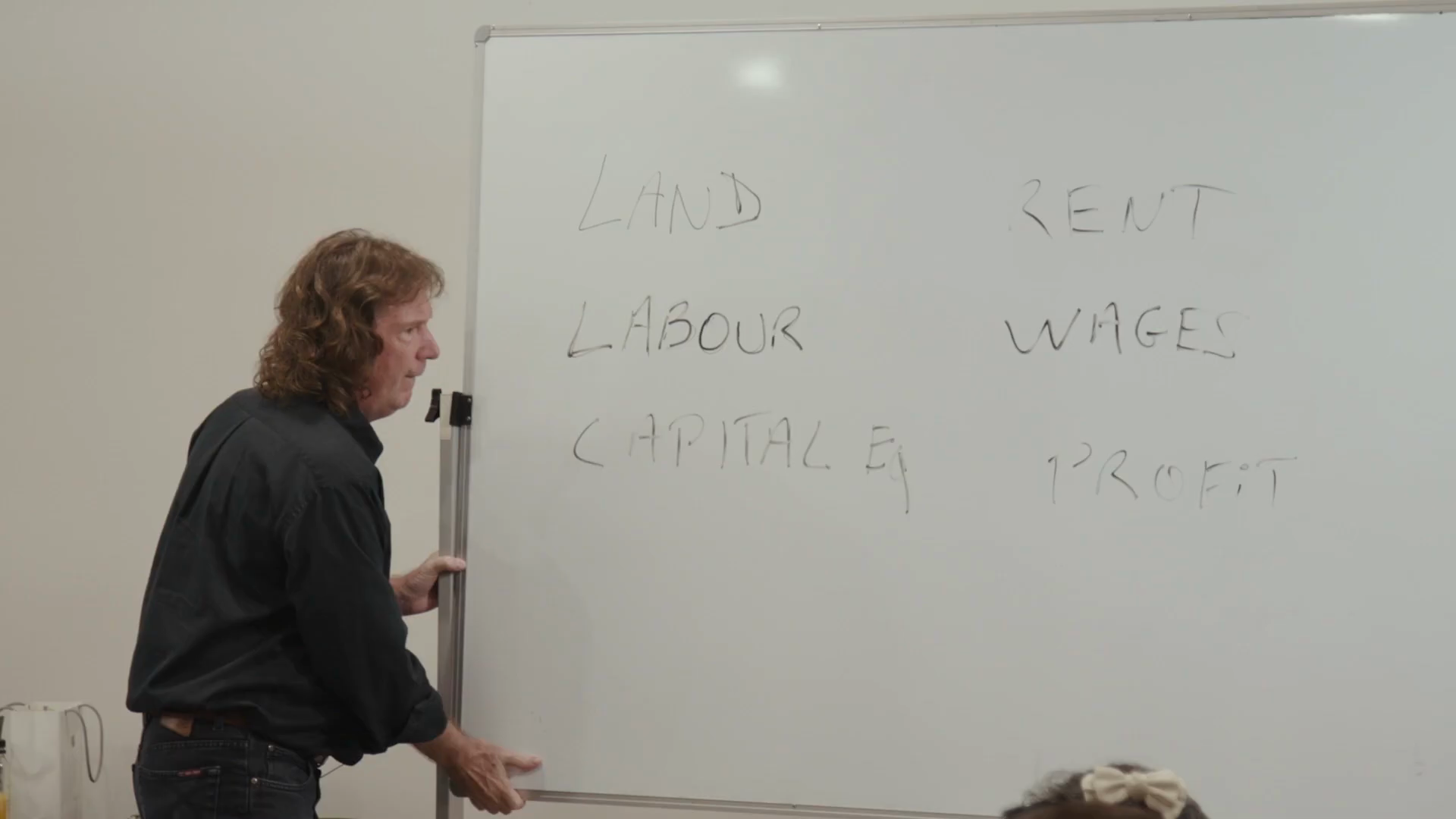 Land, Labour, Capital, Economic Rent — whiteboard diagram of the four factors of production.
Source: 2022-10-01-bbi-gold-coast-session-part-1
Land, Labour, Capital, Economic Rent — whiteboard diagram of the four factors of production.
Source: 2022-10-01-bbi-gold-coast-session-part-1
 Land price cycle — graph showing the rise and fall of land values across the cycle.
Source: PSE Video
Land price cycle — graph showing the rise and fall of land values across the cycle.
Source: PSE Video
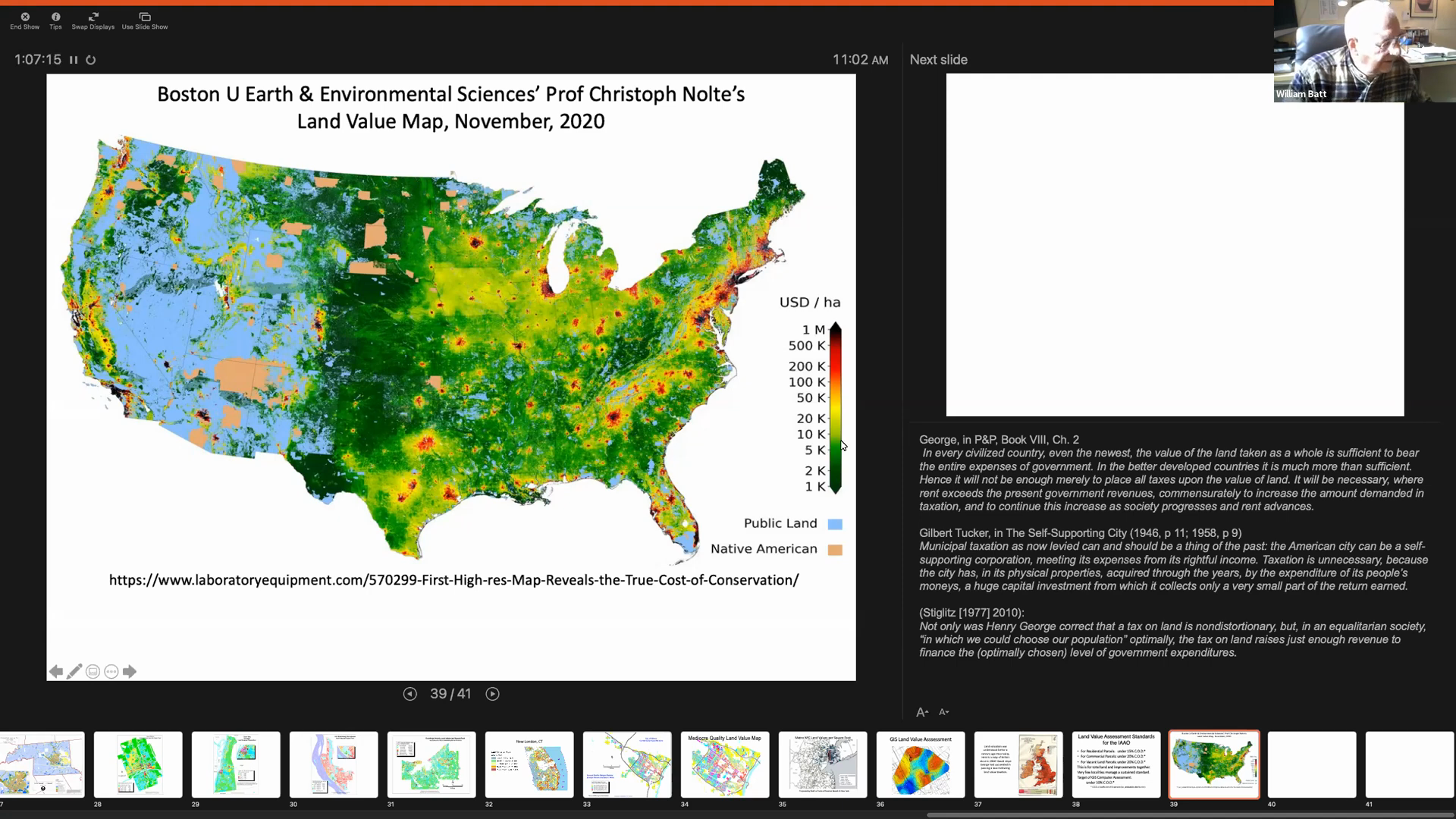 Land value map — geographic visualization of land price concentrations.
Source: PSE Video
Land value map — geographic visualization of land price concentrations.
Source: PSE Video
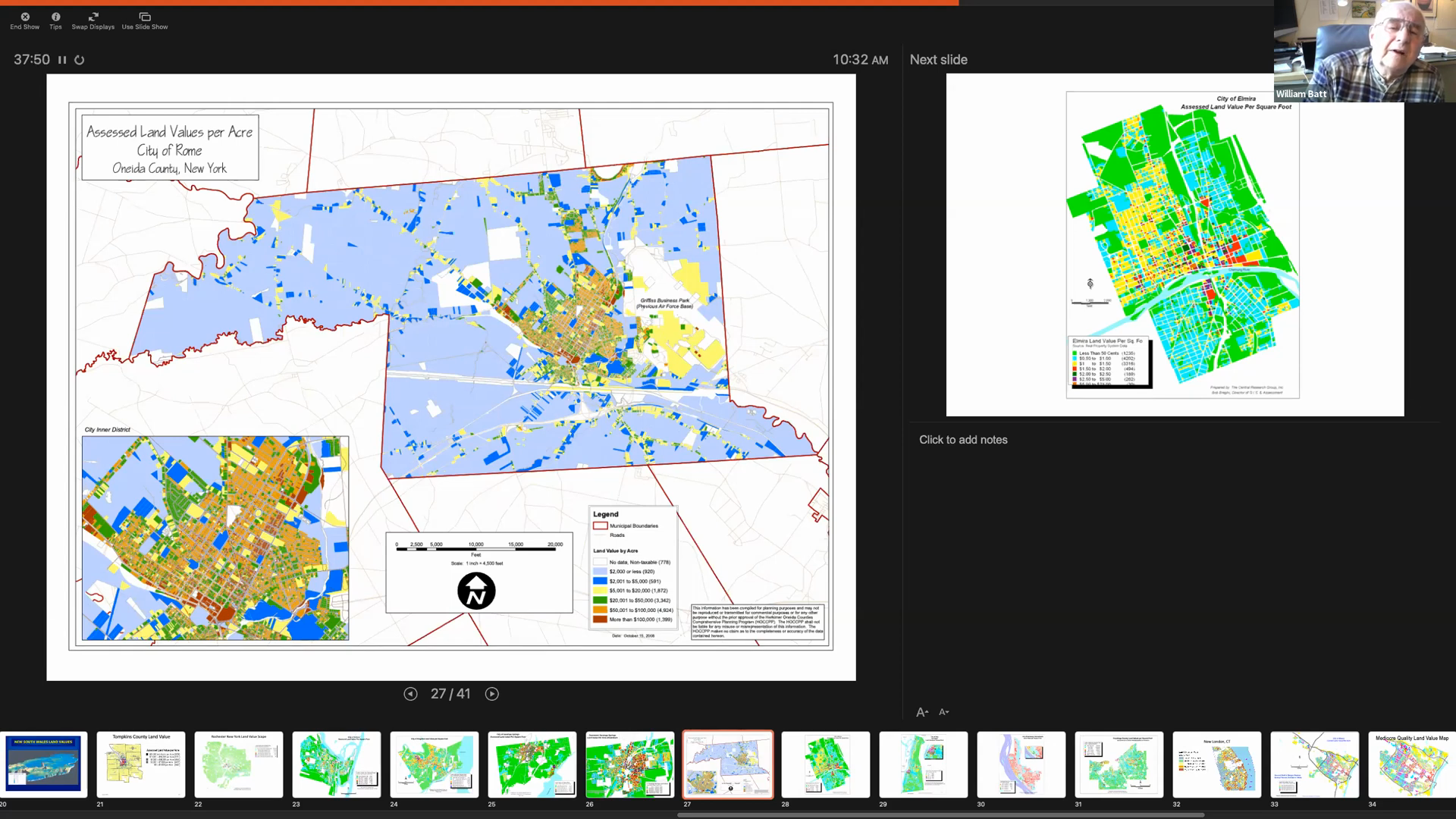 Land value prediction — forecasting land price movements using the cycle framework.
Source: PSE Video
Land value prediction — forecasting land price movements using the cycle framework.
Source: PSE Video
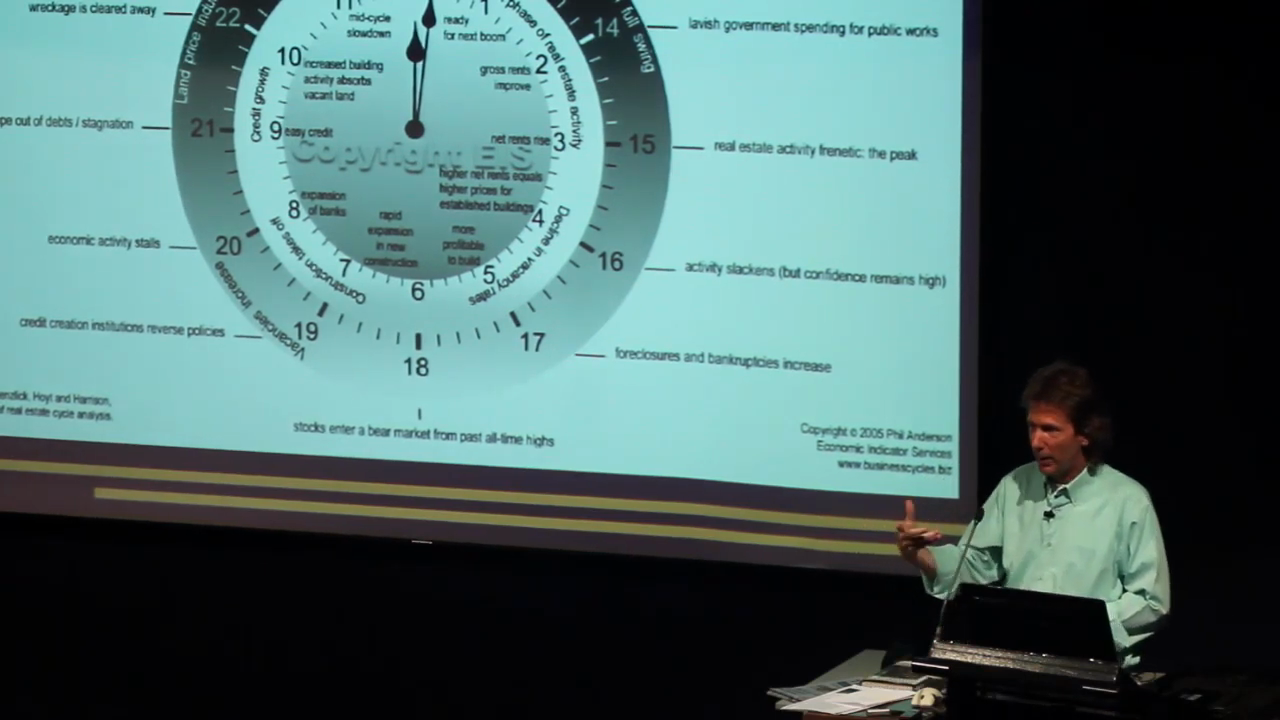 Economic stages of the real estate cycle — Phil Anderson’s stage model for land values.
Source: PSE Video
Economic stages of the real estate cycle — Phil Anderson’s stage model for land values.
Source: PSE Video
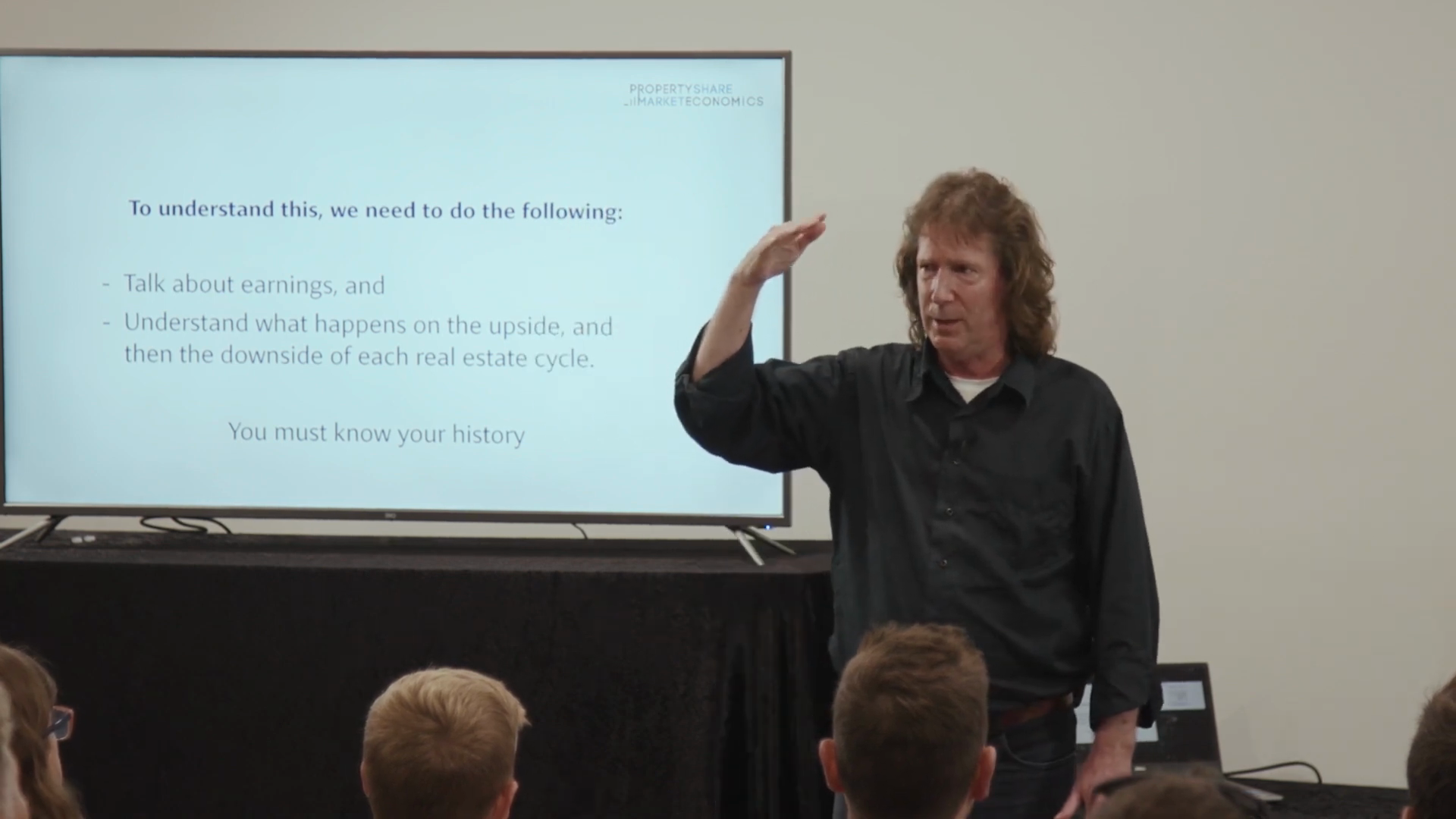 Steps to understand real estate economics — foundational framework slide.
Source: 2022-10-01-bbi-gold-coast-session-part-1
Steps to understand real estate economics — foundational framework slide.
Source: 2022-10-01-bbi-gold-coast-session-part-1
New Sources Ingested (2026-04-18)
- foldvary-depression-of-2008 (1997/2007): Foldvary explicitly combines Georgist LVT prescription with Austrian analysis. Policy prescription: land value tax + free banking together would eliminate the business cycle. [Source: foldvary-depression-of-2008.pdf]
- gaffney-role-of-land-markets-2009 (2009): Most detailed modern academic case for property tax as cycle stabilizer. Gaffney’s key argument: taxing land (not buildings) is the only non-distortionary tax; it falls exclusively on owners and cannot be passed forward or backward. ATCOR principle: All Taxes Come Out of Rent. [Source: gaffney-role-of-land-markets-2009.pdf]
- ryan-collins-rethinking-land-housing-ch1 (2017): Rehabilitates classical land economics in academic mainstream; traces disappearance of land from neoclassical theory; multiple reform paths including LVT, ownership reform, planning reform, national accounting reform. [Source: ryan-collins-rethinking-land-housing-ch1.pdf]
- georgist-journal-18yr-interview-2012 (2012): Harrison on Georgist movement failure: “locked in a time warp, lacking the imagination and drive to exploit the economic crisis.” Gaffney on the 1911 evidence that LVT worked. [Source: georgist-journal-18yr-interview-2012.md]
- 2026-09-19-bbb-postcard-44-these-books-can-make-you-rich (2026-09-19): Phil Anderson’s clearest statement that the Georgist canon is investment material, not only policy material — “I can’t emphasize enough to do your reading… Fred Harrison, Mason Gaffney, myself, Akhil… because it can truly change your investment returns.” Points subscribers to published results from the Oakleigh Financial fund (Adelaide) he runs with Tim Moffatt and Akhil Patel as evidence that the land-cycle framework converts into real capital allocation outcomes. [Source: PSE, BBB Postcard 44, 2026-09-19] — confidence: high
Ryan-Collins Perspective: Reviving Classical Land Theory (Ch. 2 + Ch. 3)
Ryan-Collins et al. (2017) make the most rigorous recent academic case for the classical three-factor model (land, labour, capital) against the neoclassical two-factor collapse:
The neoclassical erasure (Ch. 3): Mason Gaffney’s analysis of how Clark, Marshall, and Samuelson systematically merged land into capital is reviewed and extended. The political motivation: landowners and their allied economists had incentive to obscure rent as a category (since Ricardo/George had identified it as the proper basis for taxation). The mathematical motivation: two-factor models are mathematically tractable; three-factor models are not.
Land’s distinctive properties that justify separate treatment:
- Fixed aggregate supply (cannot be produced regardless of price)
- Location-specific value — all value is created by surrounding community investment (transport, schools, infrastructure), not by the landowner
- Non-depreciating — land appreciates while capital depreciates (opposite sign in the accounting)
- Inelastic supply response — price signals do not call forth more land supply (unlike capital)
- Monopoly rent potential — exclusive control of a fixed resource enables ongoing extraction
Modern evidence for land theory: UK post-war data: land values rose ~15x from 1945–2007 while building values rose ~5x — the gap IS the capitalised economic rent driven by collective investment in cities. The land residual (land value = total property value minus building replacement cost) reveals the true scale of rent extraction hidden in standard property statistics.
[Source: 2026-05-04-ryan-collins-rethinking-economics-land-housing — Ch. 2, 3]
Bird’s Mainstream Corroboration (2025)
Mike Bird’s The Land Trap (2025) represents a notable mainstream endorsement of the core land value theory argument from outside the Georgist tradition:
- Bird documents that land wealth has grown from 18% to 26% of private assets in rich countries since 2000, even as the economy became more intangible and digital — confirming the Georgist claim that land captures economic surplus
- Henry George is cited by Bird as having correctly identified the central problem, though Bird credits the Marxist takeover of left politics as the key reason George’s solution never won
- Bird explicitly recognizes Sun Yat-sen’s Georgist land tax proposals for China as the road not taken — and argues China’s current economic problems reflect the consequence of relying on land sales instead
- Bird’s framing of land as “zero-sum” asset (one person’s gain requires another’s loss) directly parallels the Georgist rent analysis
- Bird does NOT endorse 100% LVT; his policy recommendation is modest, pragmatic, and politically hedged [Source: 2026-05-15-the-land-trap-mike-bird, 2025]
Additional Cross-References (2026-04-18)
- Property Tax as Cycle Stabilizer — the operational form of LVT in cycle dampening
- Geo-Austrian Synthesis — Foldvary’s integration of LVT into predictive theory
- Land-Credit Feedback Loop — Ryan-Collins’ analysis of what LVT would break
- Fred Foldvary — rigorous academic synthesizer
- Mason Gaffney — primary academic advocate; ATCOR principle
- Homer Hoyt — his Chicago data is the empirical foundation for why LVT is needed