Summary
Economic rent (in the classical sense) is the return to land (location) that is not earned through labor or capital investment. It arises from community-created value and should, in PSE’s view following Henry George, David Ricardo, and Adam Smith, be collected by the community as a “citizens’ dividend.” Instead, it is privately captured, creating the real estate cycle and all its attendant inequality, speculation, and eventual crisis. This is PSE’s root cause thesis for virtually all economic dysfunction.
Core Claims
- 2026-05-11-book-launch-fred-harrisons-cheating (2026-05-11): Fred Harrison’s new book ‘Cheating’ emphasizes that mainstream economics deliberately removed the idea of rent, leading to a culture of cheating that harms prosperity. — confidence: high
- 2026-01-12-us-dollar-venezuela (2026-01-12): “None of this could happen if the rent of land was collected by the community, and handed back to said community as a citizen’s dividend.” — confidence: high
- 2026-01-14-small-cycles-large-cycles (2026-01-14): Chávez nationalized US oil companies instead of taxing rent — “the whole thing could have been avoided if Chávez understood Henry George, David Ricardo, and Adam Smith.” — confidence: high
- 2026-01-21-trump-running-hot (2026-01-21): All Trump economic policies (lower rates, 50yr mortgages, reshoring, etc.) simply add to land value/rent — none create real productivity. — confidence: high
- 2026-03-09-tariffs-and-the-fights (2026-03-09): BMW robotics reduce labor costs, but “they can’t introduce anything that reduces land rent costs” — all productivity gains flow into rent. — confidence: high
- 2026-03-09-tariffs-and-the-fights (2026-03-09): Australia’s tariff removal gains flowed into land prices, not workers — this is the universal pattern. — confidence: high
- 2026-03-31-roadmap-update-march (2026-03-31): “It always comes back to land and rent.” — US foreign policy is ultimately about securing rent overseas by any means. — confidence: high
- 2026-06-12-citizens-dividend-announcement (2026-06-12): Phil Anderson launches citdiv.org, a public educational platform explicitly aimed at explaining Economic Rent to a general audience. He frames SpaceX orbital/spectrum/launch-slot rights as the new form of land enclosure — “the largest enclosure of ‘land’ that we’ve seen for some time, if ever” — proving that the rent-capture dynamic has extended beyond terrestrial real estate into space. — Phil Anderson — confidence: high
- 2026-05-15-the-land-trap-mike-bird (2025): Bird (mainstream journalist framing) documents that land’s share of private assets in rich countries rose from 18% to 26% since 2000, even as the economy became more intangible — empirical confirmation that community-created location value continues to accumulate to landowners rather than workers. Also documents McDonald’s business model (40% revenue from rent, $40B in land assets) as a corporate example of rent extraction at scale. — confidence: high [Source: Bird, The Land Trap, 2025, Ch. 1, Ch. 6]
- 2026-07-01-pse-sub-28-roadmap-notes-into-july (2026-07-01): “It’s hard to see wars calming down any time soon (they’ll never end under a system of land enclosure). Especially when war becomes the US President’s family business.” Anderson extends the rent-capture thesis to geopolitics: wars are structurally inevitable under land enclosure because the incentive to capture rent-producing territory persists, and when political leaders personally profit from military spending, the incentive to prolong conflict intensifies. — confidence: high [Source: PSE Sub #28, 2026-07-01]
- 2026-07-02-pse-sub-29-july-commentary (2026-07-02): “The current US president is a master in spending other people’s money — yours now. He knows borrowing creates spending and military spending is the best of all. It’s now part of the family business.” Anderson extends the Trump-family-military-business theme: government borrowing to fund military spending is a form of rent extraction — the public debt becomes the mechanism through which economic rent is transferred from taxpayers to military contractors and their political enablers. — confidence: high [Source: PSE Sub #29, 2026-07-02]
- 2026-09-19-bbb-postcard-44-these-books-can-make-you-rich (2026-09-19): Anderson presents the rent-capture literature itself as an investment edge — reading Harrison, Gaffney, Patel and his own work “can truly change your investment returns,” with results from the Oakleigh Financial fund he assists in running offered as proof that understanding economic rent translates into capital allocation performance. The rent framework is thereby framed as a return-generating analytic rather than a purely moral or policy argument. [Source: PSE, BBB Postcard 44, 2026-09-19] — confidence: medium
Mechanism / How It Works
- Economic activity creates location value (rent) — driven by proximity to infrastructure, resources, markets
- Land owner privately captures this rent (by owning the title)
- Worker/business pays rent either directly or through house prices
- As economy grows, all productivity gains absorbed as higher rent → higher land prices
- This creates inequality (land-owners vs. workers) and the speculation cycle
- If instead rent were taxed (Henry George’s “Single Tax”) and returned as citizens’ dividend, the cycle would be eliminated
Key Evidence
- Venezuela nationalization vs. Georgist rent tax: a clear historical example of choosing the wrong model
- Australia post-tariff removal: productivity gains went to land prices, not wages
- BMW robots: labor savings → rent absorption
- US foreign policy: destruction of Venezuela, Iran = rent capture via dollar hegemony, pipeline deals
- Every US policy intervention (rate cuts, 50-year mortgages, Fannie/Freddie) simply bids up land
- SpaceX (2026): orbital launch slots, Starlink spectrum licences, and launch-pad siting rights function as the new frontier “land” — private capture of location value created by the community of satellite-spectrum users, supported by permissive Trump-era spectrum policy. [Source: 2026-06-12-citizens-dividend-announcement]
- Lizzie Magie’s Prosperity game (2026): Darren Wilson (BBB Postcard #39, July 15 2026) promotes Prosperity, a digital version of Lizzie Magie’s original Landlord’s Game — the game that was stolen and repackaged as Monopoly. Magie’s original version was designed to show how capturing economic rent for the community benefits all of society, whereas Monopoly inverted the lesson into a game about hoarding. Wilson’s promotion of the game to PSE subscribers continues the PSE pattern of using accessible cultural artifacts (documentaries, podcasts, games) to educate the public about economic rent. [Source: [[2026-07-15-bbb-postcard-39-mercury-retrograde-grain-markets|BBB Postcard #39]], 2026-07-15]
Applications
- Explains why political “fixes” never solve the cycle
- Explains why inequality persists despite productivity growth
- Citizens’ dividend funded by land value tax is the PSE policy prescription
- Use to filter which policies will actually affect the cycle vs. which are noise
Contradictions & Open Questions
- No country has fully implemented the Georgist rent tax — all claims about its effects are theoretical
- Phil Anderson’s framework is ideologically Georgist — this may create confirmation bias in analysis
Related Concepts
Visual Evidence
Slides from PSE video content illustrating economic rent, land taxation, and rent extraction theory.
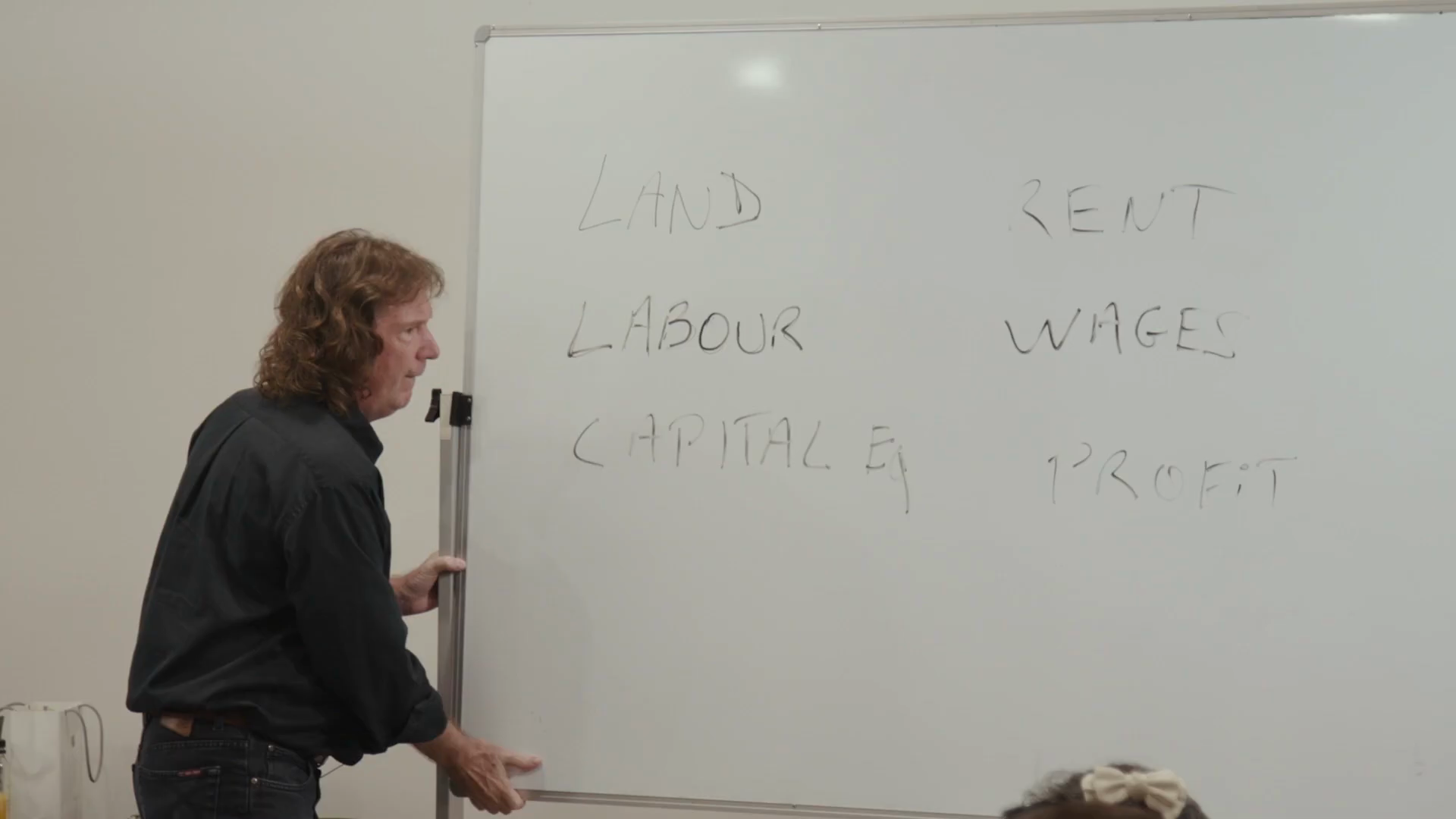 Land, Labour, Capital & Economic Rent — whiteboard diagram of the four factors of production with rent highlighted.
Source: 2022-10-01-bbi-gold-coast-session-part-1
Land, Labour, Capital & Economic Rent — whiteboard diagram of the four factors of production with rent highlighted.
Source: 2022-10-01-bbi-gold-coast-session-part-1
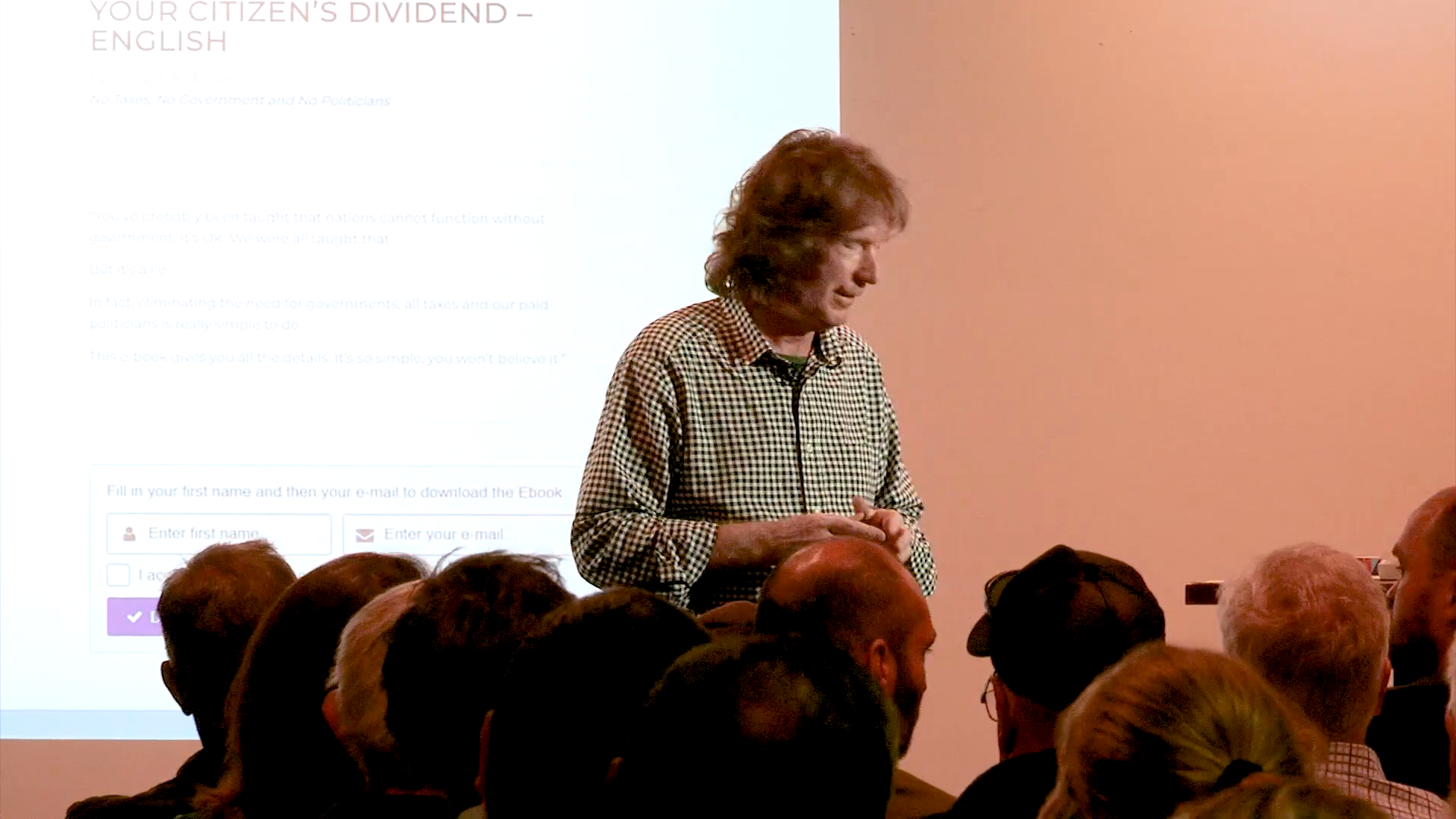 Citizens Dividend — slide on Georgist land tax → universal dividend policy proposal.
Source: PSE Video
Citizens Dividend — slide on Georgist land tax → universal dividend policy proposal.
Source: PSE Video
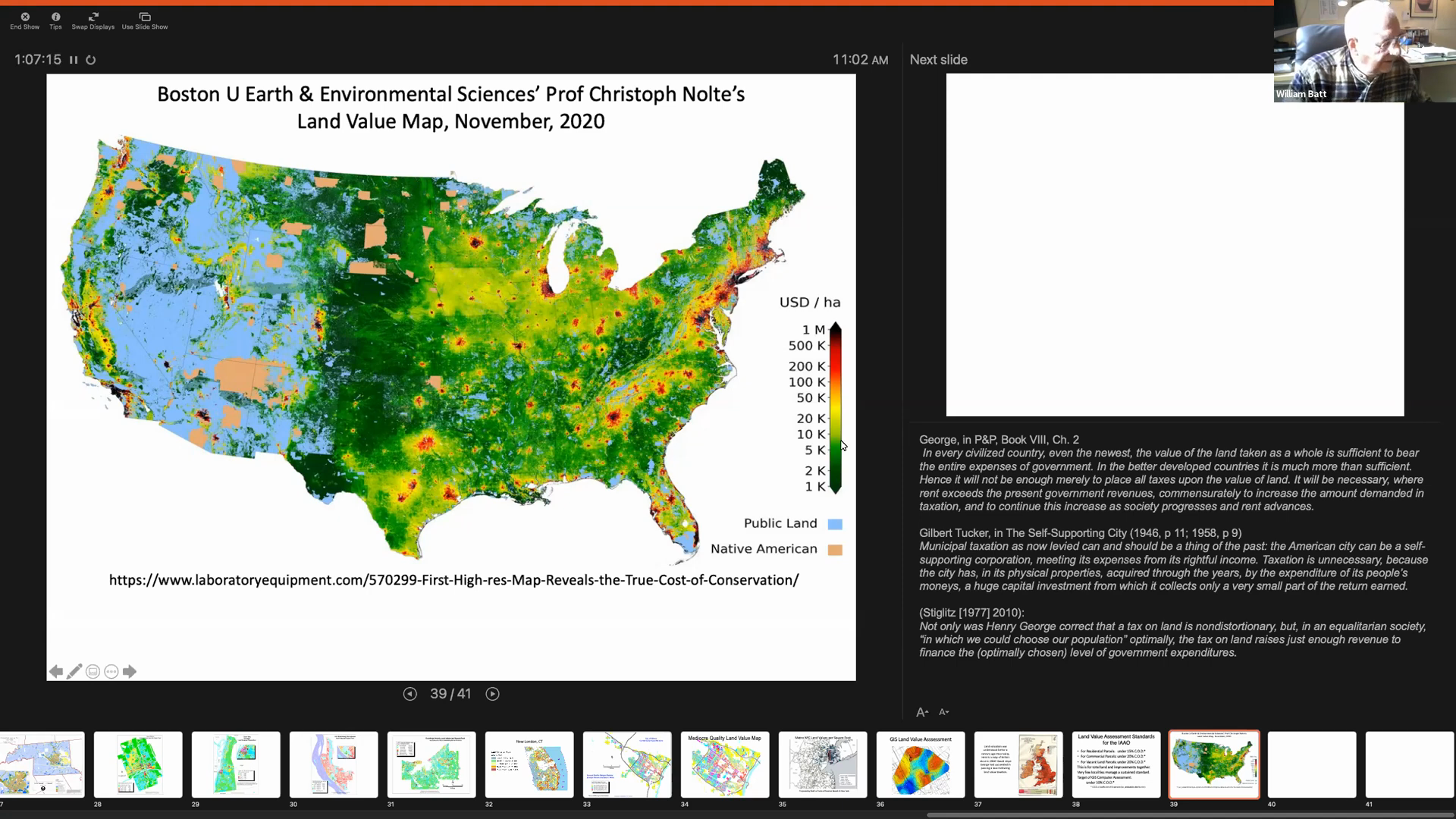 Land value geographic map — showing concentration of economic rent in urban land.
Source: PSE Video
Land value geographic map — showing concentration of economic rent in urban land.
Source: PSE Video
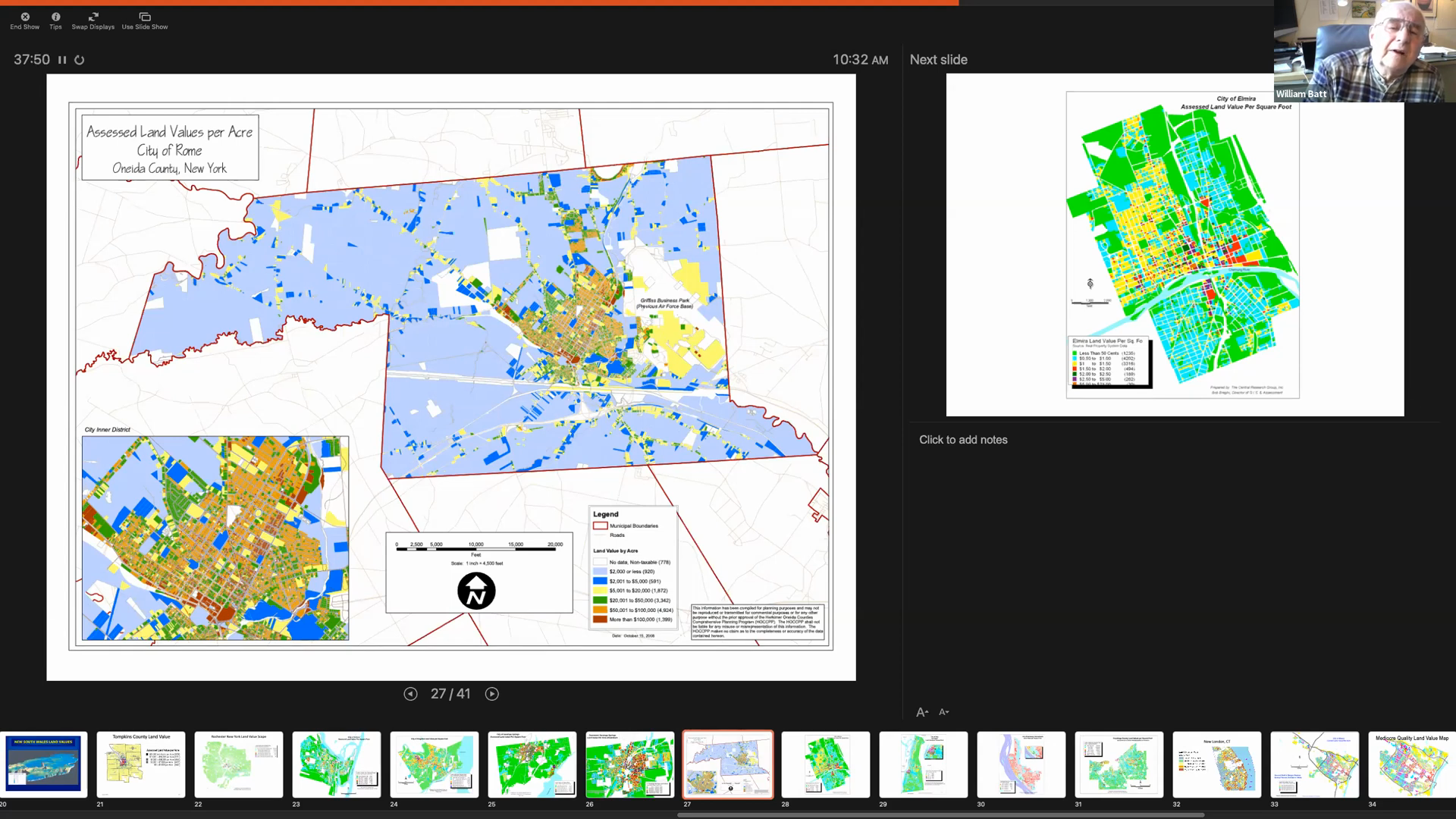 Land value prediction — forecasting land price movements using the cycle framework.
Source: PSE Video
Land value prediction — forecasting land price movements using the cycle framework.
Source: PSE Video
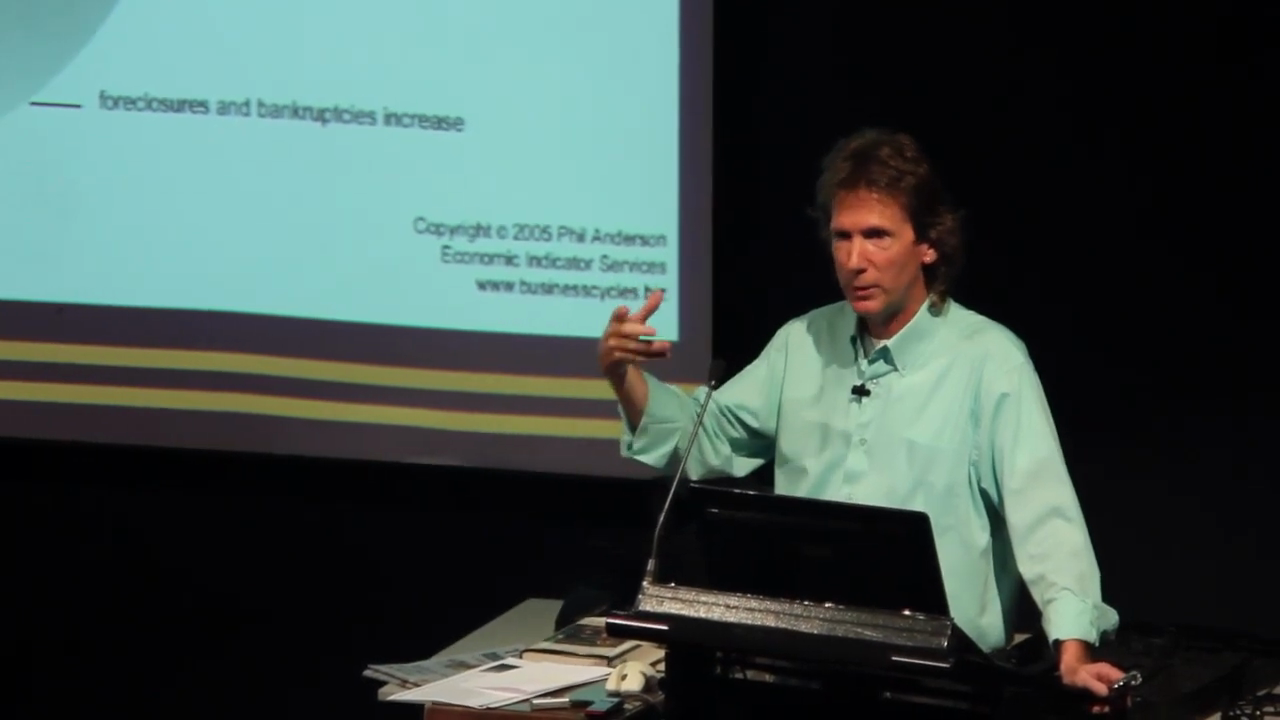 Economic stages — Phil Anderson’s diagram showing how rent drives the economic cycle.
Source: PSE Video
Economic stages — Phil Anderson’s diagram showing how rent drives the economic cycle.
Source: PSE Video
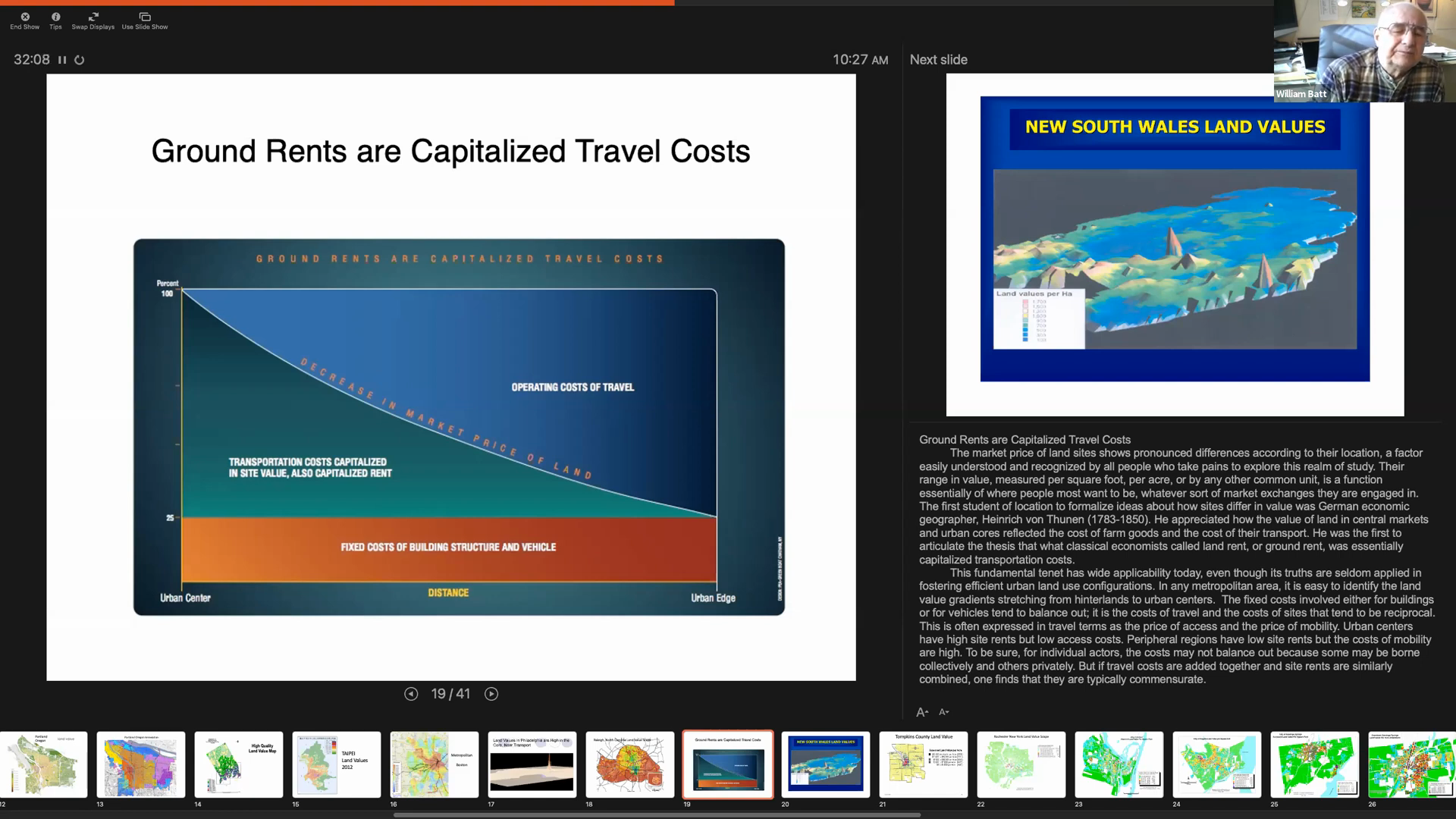 New South Wales land data — Australian land value data used in economic rent analysis.
Source: PSE Video
New South Wales land data — Australian land value data used in economic rent analysis.
Source: PSE Video
New Sources Ingested (2026-04-18)
- foldvary-depression-of-2008 (1997/2007): Foldvary’s Geo-Austrian synthesis identifies economic rent (Georgist component) as the timing mechanism for the 18-year cycle. Policy fix: land value tax replaces all other taxes. [Source: foldvary-depression-of-2008.pdf]
- gaffney-role-of-land-markets-2009 (2009): Gaffney’s 8-element cycle dissection; all elements trace back to overpricing of economic rent (land). “Element 4: Land-price appreciation induces destruction of capital” — sellers consume unearned gains, drawing down capital stocks. [Source: gaffney-role-of-land-markets-2009.pdf]
- ryan-collins-rethinking-land-housing-ch1 (2017): UK evidence: post-WWII land values up 15x vs. house prices up 5x — the gap IS economic rent capitalized into land value. [Source: ryan-collins-rethinking-land-housing-ch1.pdf]
- georgist-journal-18yr-interview-2012 (2012): Gaffney’s “fireweed” model — “their lust for unearned increments takes them over after a while” — economic rent as the irresistible speculative attractor. [Source: georgist-journal-18yr-interview-2012.md]
Ryan-Collins Perspective: Rent in the Modern Financialised Economy (Ch. 3 + Ch. 6)
Ryan-Collins et al. (2017) revive Ricardo’s rent theory and apply it to post-deregulation Britain. Their core contribution: the erasure of land (and therefore rent) from neoclassical economics since the 1930s is the single biggest gap in modern economic theory. Key additions to classical rent theory:
- Rent is not just agricultural: In modern economies, economic rent is primarily captured through residential and commercial land values in cities — urban rent has replaced agricultural rent as the dominant form.
- Rising wealth-to-income ratio = rising rent capture: The Piketty data on rising wealth inequality is driven not by productive capital accumulation but by rising residential land values — i.e., capitalised rent. Stiglitz (2015): “Much of the growth in inequality… are related to an increase in rents and land values.”
- Rent and credit interact: Bank mortgage lending capitalises future expected rents into present land prices, then further inflates them via the credit-land feedback. The feedback loop is fundamentally a rent capitalisation loop: banks lend against the discounted present value of future rents, driving up prices, which raises expected future rents, which allows more lending.
- Policy implication reinforces Georgist prescription: LVT taxes the annual rental value of land, directly targeting economic rent at source. Countries with stronger LVT (Singapore, Denmark, Taiwan) show lower rent capitalisation into speculative land prices.
[Source: 2026-05-04-ryan-collins-rethinking-economics-land-housing — Ch. 3, 6]
Additional Cross-References (2026-04-18)
- Geo-Austrian Synthesis — Foldvary’s integration of rent theory into a predictive model
- Property Tax as Cycle Stabilizer — Gaffney’s detailed mechanism for how LVT dampens speculation
- Land-Credit Feedback Loop — Ryan-Collins’ modern explanation of how rent drives bank credit
- Fred Foldvary — his synthesis is the most rigorous rent-theory based prediction model
- Mason Gaffney — primary contemporary academic expositor of economic rent theory